By Joyce Whitby

Our students’ first teachers in life are inarguably their parents. As educators, we have always known that parental involvement is directly related to student success. Because of the pandemic, many parents have a new perspective and appreciation for how their children learn best, or conversely, they have seen what doesn’t work as well.

As we build the foundation for recovery from lost instructional time, we are also focusing on rebuilding students’ social emotional wellness. Sharing this information with parents is critical, especially as we approach the summer school break. Just sharing the knowledge about how trauma affects the way children learn, and the way their brain allows them to function in a social and academic environment, is extremely valuable.

Trauma affects the way children learn, and the way their brain allows them to function in a social and academic environment. As parents and educators, the most essential aspect of teaching and learning is helping students develop the learning brain and use less of the survival brain on a daily basis.

The power of Trauma Informed and Restorative teaching strategies really multiplies when all members of a learning community come together to learn about and institutionalize best practices to:

  • Understand the different types of trauma
  • Recognize what trauma looks like in learners
  • Realize the differences between the “Learning Brain” vs the “Survival Brain”
  • Teach students strategies to deal with trauma induced emotions and anxiety

FREE RESOURCES TO DOWNLOAD:

  1. DeMystifying Trauma: Use this handy infographic to share basic info and generate awareness with faculty, staff and parents working with students as we all pull together to support social emotional health during this recovery period. DOWNLOAD 
  2. The Power of Language: Helpful reminders of how to choose words to encourage, support and build up students experiencing trauma. DOWNLOAD

REGISTER FOR FREE for our May 26, 2022 webinar De-Mystifying Trauma for Parents and the Learning Community https://www.brightenlearning.com/upcoming-webinars/

Social Emotional Learning (SEL) is the new buzz word used by every pundit and publisher these days. As special
educators, we have always addressed essential social skills based on each child’s individual needs. Though it is
wonderful that SEL is getting so much attention, and funding, it is critical to clearly define how to address SEL
within the context of maintaining compliance with Individual Education Plans (IEPs). One size does not fit all. This
blog post challenges readers to explore a continuum of developmentally appropriate social skills, as they build
IEP plans based on students’ needs vs a publishers’ catalog. 

Going Beyond SEL: Another way to look at how we can help our students accelerate recovery

By Joyce Whitby

April 2022

The abrupt shutdown of life as we knew it, just a little over two years ago, has taken its toll on so many aspects of everyday life. Our whole learning ecosystem – public, private, K12, higher education, virtual –  has been shaken not stirred!

As educators, we cannot afford to wait in order to build a thorough recovery plan that meets the unique needs of our very diverse learning population. The impetus now is to accelerate recovery, help learners master unfinished learning, and get them back on a “normal” trajectory for completing their education. Clearly the full impact and long-term implications are still being examined, and will be for years to come, but since we don’t have ability to time travel into the future and analyze that research, we need to build our recovery model now sans hard data.

Miraculously, the US Department of Education (US ED) immediately projected and recognized the overwhelming needs that would be forthcoming, and has instituted several layers of funding in waves of significant funding under CARES, CRRSSA and ARP*. What is truly significant with these funding guidelines, is that they specifically call out both a need to target “academic learning loss and social emotional learning”. There really has never been a time where mental health, and social emotional well being were as put on par with academics.

Though this is a most welcomed departure from the norm, it does open up a host of questions and even controversy around the areas of emotional wellbeing, which leaves with critical questions:

  • “What is SEL?”
  • “What isn’t SEL?”
  • “Who needs SEL? When? How often? Delivered by whom?”
  • “How do we measure the effectiveness of SEL?”

We are so anxious to get back to “normal”, that school leaders are jumping into this area feet first, regardless of the ambiguity around what SEL is, and what it is not. Hence the public outcry, from parents, and concerned community members, from politicians and the media has grown exponentially. Much of which is based on misinformation and lack of facts about what is included when we address the concept of SEL and how.

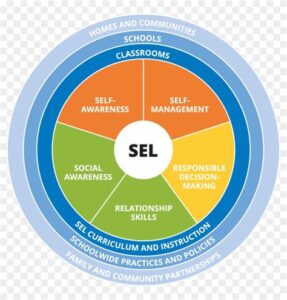
Long before the pandemic, in fact since 1994, The Collaborative for Academic, Social, and Emotional Learning (CASEL https://casel.org/) has been the de facto standard for explaining SEL via a framework commonly known as the “CASEL wheel.” At the center are five core social and emotional competencies, which are broad, interrelated areas that support learning and development. Circling them are four key settings where students live and grow. School-family-community partnerships coordinate SEL practices and establish equitable learning environments across all of these contexts.

Frankly, just diving into the research-based CASEL framework in isolation misses what we, as special educators, know is essential for students who are not performing at age-appropriate levels. That missing component is simple to base instruction on an individual’s needs. The “one size does not fit all” rule applies to everything we do in special education, so let’s look at how this should drive our approach to ensuring essential social emotional wellbeing is addressed appropriately. What we are missing as a whole in education is that we suddenly have a huge wave of students who were not previously classified with “special needs”, who now exhibit a host of issues that impede their ability to learn. No, we don’t need to classify each and every student, we need to intervene. Most of what we are seeing in the classroom of 2022 can be remediated, retaught, replenished, and restored.

If we peel back the fancy pedagogical language, the situation is a bit easier to understand. We have students across all grade levels, who have missed out on real time social interactions for two years. The importance of those interactions on the development of the whole child is greater than anyone ever imagined. Suddenly those students are back in a full-time classroom, after two years in an array of settings. It’s no wonder that they are demonstrating inappropriate behaviors. Students are breaking down in tears, or lashing out in frustration, as they encounter situations for which they are just not prepared to handle. Here are a few to consider:

  • Second graders don’t know the basics – how to line up, raise their hands to ask a question, or how to take turns. These are things that they would have learned and practiced in Kindergarten and 1st grade.
  • Middle schoolers that haven’t been around their peers for two years, are shocked to find that their friends are no longer little children, but rather, they are developing adolescents, with a host of complex social mores.
  • High School juniors and seniors are overwhelmed with tight timelines to comply with graduation requirements and college applications, even though they feel they just started High School.

The plot thickens as we consider teachers who have given every ounce of their being to helping students survive during remote and hybrid instruction. Those educators are also in need of respite, yet what they are encountering is a call to action to raise the bar even higher.

Given this reality, it is clear that everyone is dancing as fast as they can. Perhaps now is the right time to reset expectations, and address reasonable goals based on individual needs. Perhaps now is a great time to meet students where they are, and guide them along the path to pick up skills they missed. A great checklist of developmentally appropriate social skills and emotional competencies is available at Trauma-Sensitive Schools. Social and emotional competencies, such as self-regulation, strong coping and problem-solving skills, and positive social connections, buffer the effects of trauma and strengthen resilience. As we examine a student’s ability to manage themselves in socially appropriate ways, we can see areas that need direct instruction in social skills, coping skills, and life skills.

A tried-and-true mantra in Special Education is “teach to a student’s strengths to strengthen their weaknesses.” This is a great guiding principle for us to follow in terms of helping students during this time of recovery. All teaching practices should be appropriate to children’s ages and developmental status, attuned to each of them as unique individuals, and be responsive to the social and cultural contexts in which they live.

References

Collaborative for Academic, Social, and Emotional Learning (CASEL). (n.d.). CASEL (website). Retrieved from http://www.casel.org/

Developmentally appropriate social skills and emotional competencies checklist. Trauma-Sensitive Schools Training Package. https://safesupportivelearning.ed.gov/sites/default/files/TSS_Building_Handout_7_social_and_emotional_competencies.pdf

*Maximizing ESSER Funds in the American Rescue Plan Act to Prioritize Social Emotional Learning. Whitby, Joyce. Brighten Learning (website). https://socialexpress.com/wp-content/uploads/2021/03/Maximizing-ESSER-Funds-to-Prioritize-Social-Emotional-Learning_2022.pdf

Article written by Rachel Jameson

There are a number of challenges specific to social emotional learning (SEL) that parents and educators of children with special needs can face. Lack of experience with, and resources for, the specific and often complex ways a particular child relates to the world leads many to feel at a loss when it comes to these vital aspects of development.

So, to help combat these issues, let’s take a look at some strategies for bringing SEL into the broader learning process.

Become an astute observer

Knowing what will benefit any child in terms of SEL begins with a grounding in awareness of how they respond to peers in a range of situations. Children with special needs aren’t fundamentally different in this regard. However, the expression of negative and positive responses can take many forms — a few common examples are shifts in speech patterns, facial expressions or nervous tics, feeling unwell, or becoming quiet or withdrawn. Trigger stimuli that elicit a negative response are particularly worth paying attention to. How you then appropriately respond as the responsible adult should aim for consistency and positive outcomes for development.

Make use of learning apps

The revolution in digital technologies has been embraced by children, with even very young children usually being more than capable with the touch-screen interfaces that we’ve become used to. With this in mind, developers have carefully created a large plethora of apps such as the ones here at The Social Express, many of which are a hit with children with special needs such as those on the autistic spectrum. These apps can help students identify emotions and focus on social relationships in a low-stakes, fun and accessible way.

Integrate SEL into daily activities

Learning journeys are a marathon, not a sprint. Just like math, chemistry or gym, SEL is something we can always improve on incrementally, and as such it needs to become practiced on a regular basis. Apart from apps, this practice can take the form of activities in or out of the classroom such as the plenary, eventually becoming a part of lessons that many students are able to participate in with little prompting. Incorporating special needs flows from the first point about being observant, picking up on cues and understanding the student.

Consult a professional

There is no one-size-fits-all approach for social emotional learning, and this is perhaps even more so for special needs children. However, parents and educators shouldn’t be expected to simply intuitively know how to proceed. Professionals with a background in family studies are better equipped to understand and help solve the challenges that special needs children face. Educators with this training can help work with children to build the skills needed through SEL. And since learning happens inside and outside the classroom, parents can benefit from this type of training, too.

Create a plan

Depending on the child, it may or may not be necessary to develop an Individualized Education Program or IEP (something either a dedicated school Inclusion team member, or a suitably trained educator or parent, will be able to help with). A good IEP should involve the student directly with a focus on self-determination so that the goal is to maximize autonomy, and this has vital social and emotional components. Even if an IEP is not deemed necessary, setting a series of goals is a helpful way to parcel up larger goals that can otherwise be complex for students with special needs.

Article written by Rachel Jameson

Exclusively for THE SOCIAL EXPRESS

www.selday.org

 Register Now

March 25, 2021

2:00-3:00 pm ET

Social Emotional Learning:

Foundations and Integration Strategies

This webinar is designed to provide participants with a different focus on social emotional learning, emphasizing SEL as a foundation for all success, both social and academic. As we explore SEL as a building block, we will uncover strategies to transform environments with strategies that make sense and focus on success for everyone. Most importantly we will address the latest round of  Elementary and Secondary School Emergency Relief Fund (ESSER III funding) and how to ensure your plan addresses social emotional learning.


Who should attend?

 Anyone working with Pre-K-12th grade students – teachers, administrators, counselors, parent leaders

The Social Express

The Social Express has been focused on Social-Emotional Learning (SEL), Career Path Exploration and Life Readiness since 2010. Our cloud based animated programs use clever interactive simulations to teach learners how to be successful in life. Thousands of teachers worldwide are using The Social Express to help students feel less socially isolated and learn how to interact in our very social world. Now in 2021, given the reality of COVID19 pandemic quarantines and school closings, students need opportunities to learn how to relate to each other. Now, more than ever, we need to prioritize SEL and our students’ mental health.

PRESENTER: Karen Allen

Lifelong Educator and Trauma Informed Practices Advisor

Karen Allen has been an educator for over 20 years in the San Francisco Bay Area. After over 10 years in the classroom, Karen shifted her focus to supporting teachers as a curriculum specialist, and then later as a School Principal in Alternative Ed programs in Marin County, CA. Karen served as the Coordinator for the Marin County Office of Education’s Foster and Homeless Youth Education programs. Karen continues to be a lifelong education leader in Marin County and beyond, supporting teaching and learning communities through trauma informed practices and social emotional learning.


Considerations when Planning for Social Emotional Learning (SEL) in your school 2021

By Joyce Whitby

We support #SELDAY 2021 – March 26, 2021 – https://selday.org/

If you do a google search on “Maslow before Bloom” you will see there is no shortage of opinions, essays, blog posts and research on the importance of ensuring fundamental needs for survival and well being are addressed, before we focus on moving from rote memorization to higher order thinking skills. What may surprise you is that the first references of these posts that I found were posted in 2013! Here’s one quote “Educators adhere to Bloom’s Taxonomy of Learning Domains, but before schools in poverty can even get there, Maslow’s Hierarchy of needs is a more-needed consideration. This is a problem for education.” (Whitby, 2013) Thus the cry for addressing basic needs of learners has been around for as long as there has been formal education. It was already a problem; and then along came Covid-19.

Frankly, the pandemic has taken the need for addressing both physiological, safety, love and belonging, and esteem, to never before seen levels. As we have seen since school closures in March 2020, Schools are responsible for so much more basic care. Meal programs for the hundreds of thousands of students living below the poverty line have steadily grown longer as fiscal uncertainty and food insecurity have risen. School systems and community groups nationwide have risen to the occasion with steady flow of food and hygiene supplies. These schools and communities should all be applauded and are all in our collective debt. But what about the stress, the anxiety, the isolation? How are we addressing these needs in a consistent, uniform and equitable model.


Well beyond severe insecurity around basic needs of shelter, food, trust and love, the impact emotionally on us all, is taking its toll.  The combination of stress, insecurities and isolation can be seen in the rise of violent crimes (Gest, 2020), and suicide attempts (Chatterjee, 2021).  Health experts are warning that this trauma can have long-term mental health consequences. “The COVID-19 pandemic is a severe traumatic experience, whether from the social isolation, or from a parent or loved one getting sick or dying,” says Marcus Henderson, a Penn Nursing lecturer and practicing adolescent psychiatric-mental health nurse. “They’re going to carry this experience with them the rest of their lives.” (Berger, 2021)

So what is your plan for addressing the mental health needs of your school learning community?

On the whole School Leaders have done an amazing job of ensuring safety of their students and staff despite the most challenging of circumstances. In a recent education conference (edFocus,  held virtually 2/10-12/21, https://home.edweb.net/edfocus2021-agenda/), Superintendents spoke about their “silver linings” – wonderful stories about creative educators, inspiring students and engaged parents. Admittedly none were ever prepared for a situation like this. There was no “Pandemic 101” course in graduate courses on educational leadership.

The Superintendents at edFocus went on to say that  moving forward, it is likely that there will be more than just discussions in future courses, there will be case studies on what worked and how to clone that success. Presenters and attendees alike at edFocus concurred that though they were looking forward to schools opening back up, there would be many lessons learned during Covid, which would be carried forward. Another thing they all agreed on was that a focus on social emotional learning is no longer an option. In fact, they went as far as to say that SEL should be front and center for the entire learning community – students, teachers, administrators, parents and the entire school staff including secretarial, buildings & grounds, bus drivers… everyone! All members of the learning community  need and deserve an opportunity to reflect on their situation, express their feelings if they desire, and learn healthy ways to cope.

Think of SEL as fertilizer for resetting learners back on the path to fertile academic growth.

Yet, in some communities we are hearing a louder cry to address the “Covid slide”. Policy makers are arguing about the lack of data, and calling for the government to withhold funding if standardized tests are not administered in this school year. Granted, we don’t want students to miss out on age and grade level appropriate learning, but research on trauma informed practices tells us that the brain shuts down when in trauma. Thus, academic immersion will yield more if you address social emotional needs first. Think of SEL as fertilizer for resetting learners back on the path to academic growth.

Thus the question all educators should be asking themselves is “Are you just fitting SEL in, or making it a priority?” Are we just checking off a box and calling it “done”? Here are some “SEL for ALL” guidelines for your consideration for best practices that work as you build your school’s Covid recovery plan.

______________________________________________________________________________________________________

SEL for ALL – Implementation Considerations

  1. Designate an SEL Point person – don’t assume that just because it is so important, it should be part of everyone’s job, and that’s enough. Your teachers will do what they can on their own. Take a look at your team and designate someone: to own the organization of all efforts, to make valuable mental health resources accessible by all, to prioritize incoming needs, and most importantly to be a tireless cheerleader – sharing good news stories, and applauding all efforts.
  2. Ensure that there is explicit instruction in social emotional skills. Part of ensuring a consistent equitable support model is identifying those populations which need direct instruction (early childhood, special needs, adolescents), and which populations might be great peer mentors.
  3. Don’t underestimate the role of technology in SEL. Principals, Counselors and Teachers can’t do this heavy work alone. Take advantage of this spring to pilot programs like The Social Express and Cool School, to build a foundation you can build on over summer 2021 and in the 2021-22 school year.

     4.Professional development is not optional. Once again, dealing with complex trauma is not typically part of pre-service educator training. Start with your staff (teachers, admin, building staff) to provide awareness training in Trauma Informed Practices. Use that time to plan out customized schoolwide plans on how to ask open ended questions to uncover individuals at risk or in crisis; useempathetic language to build trust; and use approved standards (i.e., CASEL) to offer direct instruction around dealing with stress and anxiety.

     5.While you are at it – Don’t leave parents out! The parents are also impacted by Covid related trauma. You may also find health professionals who can help lighten your load.

______________________________________________________________________________________________________

REFERENCES

Child Psychiatrists Warn That The Pandemic May Be Driving Up Kids’ Suicide Risk. Rhitu Chatterjee, 2/2/2021. NPR. https://www.npr.org/sections/health-shots/2021/02/02/962060105/child-psychiatrists-warn-that-the-pandemic-may-be-driving-up-kids-suicide-risk

Children, the pandemic, and long-term mental health consequences. Michele W. Berger, 2/5/2021. Penn Nursing and Children’s Hospital Philadelphia. https://penntoday.upenn.edu/news/Penn-experts-unknown-long-term-mental-health-consequences-of-COVID-on-children

Gotta “Maslow” Before You “Bloom”. Jake Miller, 4/5/2016. The Educators Room. https://theeducatorsroom.com/gotta-maslow-bloom/

Humor In The Classroom: amygdala > hippocampus. Posted on 10/29/2014 by Thrasymachus https://thrasymakos.wordpress.com/2014/10/29/amygdala-hippocampus/

Steep Increase in Violent Crimes Reported This Year. Ted Gest, 9/28/2020. The Crime Repot. https://thecrimereport.org/2020/09/28/steep-increase-in-violent-crime-reported-this-year/

The Poor have no Bootstraps to Pull Up. Whitby, 2013, My Island View. https://tomwhitby.com/2013/09/10/the-poor-have-no-bootstraps-to-pull-up/

What Covid-19 Can Teach Us About Remote School Management. Mustak Ahmed. 6/12/2020.  MasterSoft erp. https://www.mastersofterp.com/blog/what-covid-19-can-teach-us-about-remote-school-management/

Where’s the Silver Lining for Education? Chaos Learning: Classroom vs Online? Tom Whitby @tomwhitby. 4/10/2020 https://tomwhitby.com/2020/04/10/chaos-learning-classroom-vs-online/

Why We Need to Support Social-Emotional Learning for All Our Students!

At a recent parent teacher conference a passionate teacher found herself explaining why she dedicates daily instructional time for activities to address topics of social and emotional learning (SEL), with the goal of strengthening her students’ overall emotional health and ability to interact socially in positive ways. Surprisingly, her presentation was met by a stark remark from one of the parents who said, “I never had SEL lessons in school and I came out alright!”

Somewhere over the past 50+ years we have finally figured out that education is not all ABCs and 123s. We have learned that separating the learning from the learner just creates angst, it doesn’t create lifelong learners. The new wave of interest in SEL is promising, and provides options for educators. How do we as educators who believe in teaching the whole child (including social and emotional skills) help others to understand why this is important – that is, how do we “sell” SEL instruction to all stakeholders including administrators, teachers, students and parents?

 What is SEL? Social and emotional learning (SEL) is the process through which children and adults acquire and effectively apply the knowledge, attitudes, and skills necessary to understand and manage emotions, set and achieve positive goals, feel and show empathy for others, establish and maintain positive relationships, and make responsible decisions (CASEL). In order for students to develop the knowledge, attitudes, and skills described in SEL, students need to be competent, or have abilities, in five areas: self-awareness, self-management, social awareness, relationship skills, responsible decision making.


The Importance of Social Learning

Our world is a social place, and we spend most of our time as members of social groups. We all use our social skills everywhere we go. Social skills are about sharing space with others and being able to get along with people in a variety of settings. An individual’s social success is based upon the quality of his or her social interactions. In order to have positive social interactions, an individual needs to be socially competent and have strong social learning skills.

Education in the United States has matured since the passing of Title I in 1965, we now look for research-based instructional practices and data based decision making. Accountability is not a foreign concept, in fact it is right up front and center stage. When we look at building a case for justifying SEL instruction, we can include some amazing data. In fact, research shows that SEL not only improves achievement by an average of 11 percentile points, but it also increases prosocial behaviors (such as kindness, sharing, and empathy), improves student attitudes toward school, and reduces depression and stress among students (Durlak et al., 2011).

The role of technology in reaching students who are socially ‘challenged’

In today’s world technology is a natural medium for just about any student to help them learn and engage in new concepts. Technology offers an opportunity to experiment in real life scenarios without any dangerous consequences. Simulated personal interactions afford students a safe haven to learn more about those non-intuitive things – like learning body language, picking up on sarcasm or other verbal nuances which are not very clear.

Introducing The Social Express

In a safe and familiar learning environment, The Social Express animated interactive program provides students an opportunity to learn and practice skills needed to help them develop meaningful relationships and successfully navigate our social world. The Social Express was designed for students to use at school or home, and provides educators and parents with insightful data about students’ growth in key areas of social emotional learning.

In over 80 animated interactive lessons, The Social Express aligns with basic tenets of Universal Design of Learning (UDL)  by offering different types of learning methods including online and offline activities.  In addition, The Social Express is both research-based and research-backed! A research study with over 350 students concluded there were statistically significant improvements for students when the implementation was part of a schoolwide initiative.

Each “webisode” teaches foundational skills for social and emotional learning such as:

  • Attentive Listening
  • Conflict Resolution
  • Conversations
  • Critical Thinking
  • Group Participation
  • Non-Verbal Communication
  • Relationship & Self Management

The best part about The Social Express is that even though you might have to “sell SEL” to other adults, you never have to sell it to the students themselves. The interactive lessons are engaging and fun. Countless testimonials concur that the application is awesome! Thousands of teachers worldwide are using The Social Express to help students feel less socially isolated, and learn how to interact in our very social world.

By Joyce Whitby

@jwhitby1 joyce@innovations4education.com

References:


On September 21st, 2012, the state of California signed into law AB 1729. Effective as of January 2013, this law aims to protect student’s rights against automatic and immediate expulsions and suspensions. The implementation of AB 1729 marks a significant shift from automatically punishing students for misbehaving[i]. Instead, AB 1729 requires that school officials first pursue alternative measures to punishment before turning to suspension and expulsions as a last effort. This shift has increased student participation and attendance by improving the social climate of schools through reduced conflict and behavioral issues.

The Previous Nature of Suspensions and Expulsions

Before the implementation of AB 1729, California Education Code 48900 gave the power of expulsions and suspensions to school officials. Code 48900 stated that pupils could be suspended or expelled simply if a superintendent or principle determined that a student committed a specific, non-violent act[ii].

Such non-violent acts included class disruptions and willful defiance[iii]. Under the previous Code 48900, school officials were allowed to turn to alternatives to expulsion and suspension for these non-violent acts. Prior to AB 1729, however, these school officials were not mandated to pursue alternative methods before resorting to suspension or expulsion.

Penalty Alternatives Under AB 1729

The 2013 implementation of AB 1729 transformed Code 48900 by requiring that principals and superintendents first use non-punishment methods before turning to suspension and expulsion. Schools are required to thoroughly prove and document these alternative means of correcting student behavior. All alternative measures taken must be documented on a student’s official record. These alternatives must be both age appropriate and personally designed to address the student’s specific behavioral problems[iv]. As outlined by AB 1729, these specific other means of correction include:

  • Programs that teach positive behavior
  • Conferences between school personnel, parents, and students
  • Participation in restorative justice programs
  • After school curriculum that targets behavioral issues with positive skills development
  • Social Emotional Learning (SEL) programs

Punishment alternatives, such as these, were mandated in 2013 to reduce expulsion and suspensions, but just how successful have these policies been?

Reduced Punishment Drives Attendance and Engagement

Between 1970 and 2013, suspension rates in the United States more than doubled – from 3.7% to 7.5%. In 2012, when AB 1729 was signed, up to 400,000 students were suspended from school at least once per year. To track the impact of AB 1729, the California Department of Education began a series of case studies on select California school districts. One of these school districts with the greatest increase in attendance under AB 1729 was Tuolumne County[v].

In the 2011-2012 Tuolumne school year, 640 students were suspended and 46 pupils were expelled. By 2014-2015, only 373 students were suspended and a mere 15 were expelled. The Los Angeles Unified School District additionally experienced a similar phenomenon under AB 1729. Since the law’s 2013 implementation, LA Unified has experienced a 24% decline in suspensions and a 31% decline in expulsions[vi].

California school districts have seen these drastic drops in suspension and expulsion rates through turning to policies that teach and reinforce positive social behaviors and skills. When fighting, bickering, and disruptions occur in the classroom, schools no longer automatically punish students. Instead, schools have issued school-wide positive behavior, intervention, and SEL programs to correct negative behaviors and implicit biases that cause conflict[vii].

Social Emotional Learning (SEL) is the process of teaching students to acquire and apply positive behavior skills and attitudes. These skills and attitudes include managing emotions, establishing positive relationships, and handling challenging social situations. SEL programs implemented in California under AB 1729 have reduced:

  • Disruptive behavior by 64%
  • Physically aggressive behavior by 45%
  • Discipline referrals by 43%

These declines in negative interactions and behaviors are due to schools using alternatives to expulsion and suspensions. These reduced punishments keep students in school and increase attendance by eliminating penalties that remove pupils from the classroom. By introducing practices that encourage positive behavior instead of punishing negative behavior, schools create a more engaging environment. Pupils in a positive social environment are less likely to act out in school and more likely to be excited about learning.

The SEL and positive alternative approaches to punishment that AB 1729 has introduced have not only driven suspension and expulsion rates down, but have created positive social environments where kids are excited to come to school and engaged in their learning.

About CoolSchool Central

CoolSchool Central aims to facilitate the transformation that Changes Futures by using SEL and video modeling. With CoolSchool Central, schools have the opportunity to save funding that can be invested back into the system to continually work towards positive behavioral development for students. Good for schools, good for students. Let’s help make this positive change together!

CoolSchool Central’s mission is to Change Futures by helping public schools create a safe, enjoyable environment where kids are excited about education. Studies show that the two key reasons why children don’t go to school are being afraid of being bullied at school and finding school to be boring. Using animated interactive programs, CoolSchool Central delivers SEL in an easy and engaging way to teach kids how to manage and navigate social interactions – creating truly CoolSchools.
We’ve all heard the stories about the long-haired nerd who avoids other people, sticks to himself, and aces every course he takes. The research shows that academic achievement rarely works like that – especially for primary and secondary school age children. In fact, the research shows just the opposite: Students who are well adjusted and have strong relationships with their teachers and other students are more likely to do well in school than those who don’t.

Schools Can Create Supportive Environments
When we see children who are well-adjusted, have productive and high trust relationships with their teachers and fellow students, and perform well academically, we applaud the students. On the other hand, when a student is not well-adjusted, is suspicious of others, and performs poorly in school, we blame the child.

Some children may have an innate drive in one direction or another, but the major influences on children are their home lives and their schools. These are the influences that can “make or break” a child. It also means that schools have a far greater role in determining the success of their students than most people have thought. The environment schools promote has a dramatic effect on the success of their students. The academic performance of the student body tells far more about the schools than it does about the aptitude and attitudes of the students on the day they enter their schools.

Social Skills Are Latent in Children and Shaped by Schools
Social skills are entirely voluntary. Positive social skills benefit others. These skills are easy to recognize because others can observe students and recognize their:

• sense of self-awareness
• awareness of their larger social environments
• ability to control their own emotions
• propensity to build high-trust relationships with others
• tendency to consistently make responsible decisions

Because these behaviors are voluntary, the role the school plays in shaping these behaviors is all but invisible. Nevertheless, the impact of schools on students’ social skills is profound. Further, the impact of students’ social skills on their academic performance is also profound. If we place this in the longstanding “nature vs nurture” argument, the evidence is very clear: nurture far, far outweighs nature.

In communities where parents don’t provide the social skills training that is so vital to academic success, it falls to the schools to provide that training.

Schools set the stage for building positive social skills several ways. The most obvious way is by setting school rules for behavior in the classroom and on playground. These rules tell children how to distinguish right from wrong. These values are not intrinsic; they are taught.

But rules are not enough. Teachers and the administration need to enforce the rules consistently all the time. Enforcing the rules is a matter of discipline. But this is still not enough.

Teachers need to recognize and reward their students’ social behaviors. More than that, students must recognize the achievements of the other students. This recognition of positive social behaviors provides feedback to each student about how to behave. They have to learn what is anti-social and what is acceptable.

Students who bully others need to be called to account – and quickly. Students will recognize their schools’ failure to identify and correct inappropriate behaviors. If left unresolved, these misbehaviors will leave lasting impressions on young children that can lead to lack of motivation in school, trouble with authority figures, and perhaps even expulsion. Schools recognize this dynamic and are adopting social programs that promote positive growth in the classroom and minimize bullying on the playground.

Academic Performance and Social Behavior Are Tightly Linked
Research has shown a correlation between childrens’ academic performance and their social behavior. Students who exhibit mature social behavior often have better academic performance than those who disregard others. Children who have positive relationships with their teachers are more apt to learn and be open to academic help and feedback. Through social programs, teachers and administrators create environments that promote meaningful student-teacher relationships and foster communities of students who want to come to school each day.

Peer-to-Peer Relations Are as Important as Student-Teacher Relations
Positive peer interactions and student-teacher relationships promote positive social behaviors and reduce bullying among elementary school aged children. These interactions and relationships can be structured through positive social emotional learning environments. This type of environment will promote cooperative classroom settings that, in turn, improve academic motivation and eliminate bullying. Social programs have the potential to reach students who are on the path for expulsion before it is too late.

The Personal and Social Costs of Being Expelled from School Are Very High
Expelling students from school is a lengthy process. It often begins with chronic absenteeism. In extreme cases, students can be expelled for causing serious physical injury to someone else, carrying a dangerous object, possession of certain substances, robbery, extortion, or assault on a school employee. The principal and the district superintendent must agree that expulsion is the only viable course of action. Students who are expelled have generally been suspended several times.

Students who face expulsion often lack academic motivation. They are often distant from peers and don’t look for positive relationships with authority figures. According to the American Bar Association, these students are 3.5 times more likely to be arrested as adults. The American Psychological Association concluded that zero tolerance of misbehavior is ineffective and leads to higher rates of antisocial behavior in the future. Students who face expulsion are unlikely to finish high school. In fact, they tend to be headed toward a life of unemployment and crime.

Expulsions don’t just affect the students. They affect the entire community. Expelling students often leads to more crime in the community. This is particularly pronounced in communities with high school drop-outs rates.

Social Skills Must Be Taught; They are Not Innate
Social behavior is a skill like any other. Parents and teachers must reinforce these for children to see them as normal and natural.

The University of Maryland’s Department of Human Development and Quantitative Methodology conducted research that demonstrated how crucial it is to build positive student-teacher relationships and improve the classroom climates through social development programs. Interactive social development programs stimulate emotional learning through cognitive development and interactions with other children. These interactions are most effective at developing positive social environments when students reinforce each other. This promotes cooperation and trust. Social programs also build a sense of community in the classroom. This comfort and positivity in the classroom motivates students to come to school.

The research also shows that when students show positive social behavior they are more likely to be successful academically. Social programs build healthy student-teacher relationships that foster better learning. Social programs condition students to receive acknowledgement for academic progress and good behavior from both their peers and their teachers. This, in turn leads students to be more invested in their education.

In Summary
When schools implement social development programs in their classrooms, children are conditioned to associate the positive social environment with learning and interacting in their classrooms. This, in turn, promotes school attendance and academic success.

At the beginning of 2013-2014 school year, the California Department of Education rolled out its Local Control Funding Formula (LCFF). The goal of the LCFF is to simplify how State funding is provided to local education agencies. The old system of funding was based on a revenue limit multiplied by the school district’s average daily attendance. With LCFF, the State has dropped its 40-year-old system; it has created a new method of funding that eliminates revenue limits and targets student profiles.
Parent-Teacher Associations Will Play Key Roles
The LCFF requires each school district to involve parents, teachers, and educators in creating a Local Control and Accountability Plan. This plan has eight areas of focus that reflect factors in and out of the classroom that shape students’ academic success. These areas include:

• basic services
• implementation of State standards
• course access
• student achievement
• other student outcomes
• student engagement
• parent involvement
• school climate

Altogether, the LCFF works to ensure that funding goes to support high quality educational programs — from fully credentialed teachers in each subject area to ensuring that school programs provide equal opportunity for each student.

The top notch educational programs are not the only part of a good school. The quality of the school social climate is just as important. With this in mind, the State designated half of the funding areas to maintaining the school climate and academic environment. These areas include:

• student health
• safety
• student discipline
• school connectedness

The State measures school connectedness through suspension and expulsion rates as well as surveys from students, teachers, and parents. The State also focuses on student engagement; the school should provide stimulating programs and course work that promote attendance and graduation. The State measures engagement through attendance rates, dropout rates, and graduation rates.

Even though the State introduced its LCFF plan, in some cases it still provides grants based on average daily attendance. The State provides school districts and charter schools a uniform base grant based on average daily attendance.

In Summary
The new LCFF plan gives school districts an opportunity to not only invest in the academic learning of students, but social-emotional learning as well. The LCFF involves the school’s parents, teachers, and staff in defining both academic and social learning programs. These programs should be designed to create an engaging and successful classroom environment. By investing in both aspects of children’s education, schools are supporting children’s academic success to the fullest extent. The academic and social-emotional programs work together to help students mature and connect to the academic environment. This, in turn, fosters a stronger will to learn. This new funding plan helps school districts promote better attendance and graduation rates by creating positive and engaging classroom environments.

While school suspensions aim to correct problem behavior, the results are often quite the opposite. Students who face suspension are more likely to end up struggling academically, face multiple suspensions, and are more likely to drop out and/or end up in jail.

Additionally, the absenteeism caused by suspension takes funding away from schools—in the hundreds of millions of dollars every year. This only exacerbates the issue as lack of resources makes it harder for schools to address problem behavior by students.

A vicious cycle can form where a student does not correct the problem behavior, faces multiple suspensions and eventually expulsion, and then moves to another school where the cycle continues. This not only likely results in students dropping out, but also leaving schools with low attendance, further reducing the funding they get.

Most educators understand this, but are at a loss for practical and effective solutions for correcting problem behavior without expelling or suspending students.

The Process of Suspending a Student

The decision to suspend a student comes about when a principal considers that the safety, care, and wellbeing of the student, staff, or other students is at jeopardy. Suspension of a student is typically considered when the student is involved in:

  • An act of violence
  • The possession of a firearm or prohibited weapon (including knifes)
  • The possession of illegal substances
  • An act of serious criminal behavior related to the school

Before a student can be put on suspension, a principal must consider the age, disabilities, and developmental level of the student, as well as the student welfare strategies that have been implemented, such as seeing the school counselor or nurse.

Based on the severity of the student’s actions, suspension can be broken down into short and long-term suspensions. A short-term suspension is when a student is suspended no more than four school days at a time. Short suspensions are typically implemented for cases of continued disobedience and aggressive behavior.

For a long-term suspension, the principal can impose up to 20 school days of suspension. If the behavior continues after two long suspensions, then the student is subject to expulsion from the school.

Why Out-of-School Suspensions Don’t Work

It is highly likely that a student facing suspension already holds a negative view towards attending school. To such as student, a suspension does not appear as punishment, or time to reflect on his or her actions, but instead as vacation time away from school and supervision.

Suspensions do not teach students how to correct the problem behavior, nor addresses underlying issues that may be present. More often than not, the student returns and reoffends, making time away from school only exacerbate the problem at hand, as noted in the 2012 Journal of School Violence.

On the other hand, the school does not have much of a choice. While alternative steps such as counseling can be taken, these require the student’s participation in order to be effective, as well as large sums of funding needed to support behavior-correcting solutions that may simply be nonexistent. Furthermore, discipline procedures are set by the school boards and lawyers, and removing a student appears to be simpler and more appealing than seeking alternative means of correcting the behavior. In the end, suspended students are often left without the support they need to make real changes.

The New Attitude Towards Suspensions in California

The attitudes towards student suspensions are changing. In 2014, California passed a bill, developed by the State Board of Education, that eliminates willful defiance or disruption of school activates as a reason to expel students, and shifts the focus of remedies towards positive reinforcement. This bill, known as Assembly Bill 420, came as a result of a push to keep students in the education system and to reduce suspensions in the state.

Before 420, The “act of willful defiance” made up almost half of suspensions, ranging from reasons such as not turning in homework to disrespecting a teacher. After the bill came into law, more than 45% of districts received the positive ratings of “blue” or “green”, indicating favorable performance under the new suspension standards. The total number of suspensions fell from 709,580 in 2011-12 to 503,101 in 2013-14—a 29% reduction–based on data from the California Department of Education.

Moreover, in Bellflower Unified School District, the reported number of instructional days missed because of suspension in 2015-2016 dropped by 85%, compared to 2014-2015. These improvements came after the new legislative approach that focuses on investing in student-teacher relationships, positive reinforcement for behavior through Positive Behavioral Interventions and Supports, and investing in elementary school counselors.

Additionally, in Stockton Unified School District, multiple elementary schools implemented “classroom circles” where students can make amends for poor behavior towards others and work through conflicts. These schools saw referrals to the office and suspensions drop by 70% and nearly 50%.

Nonetheless, the absenteeism costs schools in California hundreds of millions of dollars. Before the new legislative rollout in 2014, public schools in San Diego County reported a loss of $102 million dollars in state funding because of absenteeism. The attendance-based funding formula forces schools to track each students’ attendance, excused, unexcused, and suspension related combined. Therefore, while the number of suspensions are seen to be improving, the funding for schools are still constantly at risk because of chronic truancy. The new legislation is working to battle suspensions, but students still lack motivation to regularly attend school. This is a problem that districts have been facing at increasing rates since 1994.

Changing the Social Climate

There is a large push in the education system to move away from the penalty approach towards the restorative practices that bring involved students together, along with adults and peers, to talk through conflict. However, the students involved must be willing to participate to make the practice effective.

Nonetheless, the restorative process and formal Positive Behavioral Interventions and Support method have shown to improve the climate of schools in California. These methods encompass meditation, youth mentoring, and classroom circles to help keep students on track academically in addition to efforts to improve student-teacher relationships. This is a facet of support that can reduce classroom chaos, instill more respect towards the learning environment, and promote attendance.

If suspensions are the only practical option, in-school suspensions are recommended so that the student can remain under school supervision and receive attendance.

Overall, the focus should be on changing the social climate of the school. If students feel respected, safe, and comfortable in their learning environment, then they are more likely to participate in positive reinforcement methods and more regularly attend school.

About CoolSchool Central

CoolSchool Central aims to facilitate the transformation that Changes Futures by using SEL and video modeling. With CoolSchool Central, schools have the opportunity to save funding that can be invested back into the system to continually work towards positive behavioral development for students. Good for schools, good for students. Let’s help make this positive change together!

CoolSchool Central’s mission is to Change Futures by helping public schools create a safe, enjoyable environment where kids are excited about education. Studies show that the two key reasons why children don’t go to school are being afraid of being bullied at school and finding school to be boring. Using animated interactive programs, CoolSchool Central delivers SEL in an easy and engaging way to teach kids how to manage and navigate social interactions – creating truly CoolSchools.