Marc Zimmerman created Social Express to help his autistic twin boys understand the world around them. Now the game is helping kids all over the world.

Software helps special needs children

Musician Marc Zimmerman had been disappointed with how schools handled his twin autistic boys for some time. As a result of autism, his third-grade sons needed extra help developing social and emotional skills. Zimmerman tells Guideposts.org:

“[Teachers] would send home a worksheet and [ask you to] plug your son’s name into this story [as if that would help the kids better relate to the story]. I was like, ‘there is no way that this is going to sink in.’”

In 2009, Zimmerman had an idea.

As he was dropping his sons off at school, a song idea popped into his head.  Its lyrics were all about his third-graders and how they could (and couldn’t) relate to their peers. He dubbed the song “Brighten Learning.”

Inspired by the song idea, with the help of his wife, Tina, and a host of academic researchers, a speech pathologist and a behavioral therapist, Zimmerman created an interactive software program called Social Express, geared specifically towards children and young adults who, like his sons, needed more than just a piece of paper to help them relate to the real world.

Social Express takes users through different sets of experiences, called “webisodes” in the program, that help them learn how to think and manage many kinds of social situations.

Each webisode is designed to take the user on a journey, letting the child (and their parent) decide which action to take. In one episode, a girl wants to sharpen her pencil and is told no by her teacher; the child and parent get to choose, what should the girl do next? How would the interaction with the adult make her feel? Each choice holds positive or negative consequences for the user, which explain how certain actions are interpreted in a social setting.

The program also works on a scale, meaning children build upon the skills they learn. If, for instance, a child completed the webisode featuring the girl and her pencil – titled “No Means No” – they would graduate to a new webisode. In many ways, Social Express is just like any other video game children play, except instead of beating the bad guys or winning the race, the way for users to get to the next level is to understand how and why social interactions impact others.

Zimmerman admits getting his brainchild off the ground was no easy task. The family contributed their life savings and persuaded angel investors to put a stake in the program. They were able to recruit some of the best animators in Hollywood – think Pixar-level – to donate their talents.

Still, convincing parents and educators that his game could actually help their children and students more easily learn social queues was difficult.

“A lot of people were like ‘how is a computer program really going to change a kid? I want my kid interacting with others; the last thing I want them to do is be spending more time on their computer,’” Zimmerman explains.

It was his own experience, sitting down with his sons to play the first episode of the program that convinced the businessman he had a project worth fighting for.

“We were sitting on the couch,” Zimmerman recalls. “Our legs were touching, our arms were touching, they were engaged and they were conversing with me,” he says, a rare experience for them, because of his children’s autism. “I had a feeling like ‘okay this is bigger than just them.’”

The Social Express is now in more than 100 schools in Encinitas Southern California school district and Zimmerman hopes to soon reach more than 15,000 schools across the country.

The father, who struggled with his children’s autism diagnosis in the beginning, says he and his wife have been able to have a fuller perspective on the disorder, thanks to this program.

You have to shift your whole focus of what your expectations [for your kids] were and now what your reality is,” Zimmerman says of parenting children with autism. “We prayed. We tried to be spiritual and know that there is a bigger plan and maybe now we know. Through this experience with our kids we’ve been able to bring a program to the world and leave a legacy.”

He wants that legacy to help parents desperately searching for ways to connect with their own children.

“My hope for the Social Express is that I can provide parents a tool to be able to feel like they are contributing to their son or daughter’s well being. That they can actually do something outside the therapist; that they feel empowered.”

He also hopes his family’s personal journey can change the way we view autism and children who suffer with social and behavioral disorders.

“It’s not a death sentence,” Zimmerman says of getting an autism diagnosis. “From my perspective it has taught me to understand that people have strengths that are unseen. To harness those strengths, [just] love people, whoever they are, whatever their problems may be, for who they are.”

https://www.guideposts.org/positive-living/this-video-game-is-helping-kids-with-special-needs/page/0/1

When Marc Zimmerman’s twins were given an autism diagnosis, he decided to create something to make their lives better.

By Jamie Pacton

Zimmerman family Courtesy Marc Zimmerman

Marc Zimmerman has been a rockstar, composer, real estate broker, and software startup entrepreneur. But his latest project—founding and running the company responsible for the incredible social situation simulator The Social Express—is the one closest to his heart and home.Marc and his wife Tina are the parents of 14-year-old autistic twins Jared and Jason. When the boys were younger, Zimmerman wanted to create something that would help them navigate tricky social situations, reinforce what the boys were learning in therapy, and be something they could watch and learn from together. With this seed of an idea, Marc invested his life savings, made concrete plans, and now, with the help of Tina and many others, The Social Express is a reality.

So, what exactly does The Social Express do? According to its website, it, “provides an opportunity for the user to become more socially competent and have successful social interactions.” Or, put in simpler terms: It helps kids practice a variety of social situations in a low-stakes setting. Through colorful, expertly-animated videos and thoughtful storylines, kids can learn more about self-management, group participation, conversations, attentive listening, conflict management, relationships, non-verbal communication, and more. Kids watch the videos, then make choices that move them further along in the storyline. There are webisodes, e-books, music, and a “clubhouse” for social networking. It’s available for the computer or as an app, and Zimmerman notes that his sons and many other autistic kids really appreciate using technology as a vehicle for practicing social rules and conventions.

Social Express Social Express

Although I was skeptical about how much my children—a neurotypical 5-year-old and a non-verbal autistic 7-year-old—would take to the videos, I’m happy to report they were both enthralled by them. Together, we watched several in which kids tried to figure out which social choice was the most productive—and all of us appreciated the interactive aspect of The Social Express. We were also able to have a bit of conversation about the scenarios and why one way of acting was more positive than another in that social situation. I appreciated the conversation starters and the fact that this was low stakes, since social interactions in the real world cause both my children a lot of anxiety.

And my kids aren’t alone in appreciating The Social Express. Zimmerman reports that it is being used in homes and classrooms in more than 70 countries around the world, and it’s won quite a few awards, including being a part of the U.S. Department of Education’s National Education Technology Plan. Some schools are even using it with entire populations of students—not just autistic ones or those with special needs—and they’re seeing tremendous positive gains in social engagement. In fact, based on this success across student populations, Zimmerman is working on an anti-bullying program, similar to The Social Express, that will help kids figure out how to stop bullying in a variety of situations. He’s also planning on rolling out simulation programs to help with life skills and job training for older kids who are transitioning out of school.

The Social Express is a great program, and I love that it was inspired by the Zimmermans’ desire to help thier sons move more easily through the world. I’m hoping that with time, patience, and through practicing in many social situations both simualted and in the real world, my kids can see similar benefits to the Zimmerman twins, who are now artists, play in a band together, attend school, are good friends, and who are beginning to think about what the future might hold.

You can buy The Social Express here, and use this discount code at checkout to take 30% off the annual subscription: COOLTOOL. The code expires April 30, 2016.

Jamie Pacton lives in the Pacific Northwest where she drinks loads of coffee, dreams of sailing, and enjoys each day with her husband and two sons. Find her at www.jamiepacton.com and Twitter @jamiepacton.

Social and emotional learning (SEL) is the cornerstone of emotional intelligence, as these abilities do not come naturally for some special education students. Children in special ed settings need to have their confidence, courage, and emotional awareness nurtured in order to successfully play, work, cooperate, and be productive in their studies. We have all heard that technology can be a great playing-field leveler in a classroom with diverse learners. It can also assist in providing social and emotional skills. Let’s face it — the digital lifestyle is here to stay, so using digital technology to enhance SEL makes perfect sense.

However, I have yet to encounter research that focuses on the effectiveness of using apps designed solely to enhance the social and emotional health of children. Researchers and educators have only begun to closely investigate the impact of these technologies on SEL. For special ed teachers, that research can’t come soon enough.

Young children acquire and utilize their initial social skills mostly in the context of play and shared activities. Through play, they form their first interpersonal interactions and develop important social skills related to empathy, cooperation, conflict resolution, and self-control, which will be used throughout life to maintain healthy relationships with others.

9 Skill-Building Apps

Several apps can be used in the classroom or at home to assist in reinforcing social and emotional learning while also helping kids cope with the pressures that we all face. These apps can help teachers and parents in addressing students with special needs, and many are also available in a web format.

    1. Breathe, Think, Do (Sesame Street) teaches children to keep calm and carry on by introducing three possible strategies for working through problems. It touches on familiar emotional challenges such as problem solving, self-control, planning, and time on task. Intended for very young children, this simple app gives players different scenarios in which the Blue Monster character needs to regulate his or her emotions using the breathe-think-do technique.
    1. Touch and Learn — Emotions (Innovative Mobile Apps) is chock full of wonderful photographs representing four different feelings per page. The child is prompted to match the verbal cue with the appropriate photo. This app focuses on helping kids read body language and understand emotions by looking at pictures and figuring out which person is expressing a given emotion.
    1. Avokiddo Emotions provides opportunities for younger children to explore a wide range of feelings through several silly characters and a plethora of props. This app incorporates activities to help children understand the subtle cause and effect of facial expressions. The main idea is exposing young children to a variety of feelings and helping them grasp emotional connections with those feelings.
    1. Emotionary (Funny Feelings) is designed to give a wide age range of kids the tools and skills to express themselves well in our world of emoticons. The app has become a popular resource for the special needs population. This collection of emotions and funny feelings now allows users to draw their own emotionary “selfie” to match how they are feeling.
    1. GoNoodle is a wonderful web-based way to get younger kids out of their seats and moving. These short physical activities provide brain breaks that can help keep them focused throughout a long day. Studies have shown that physical activity increases blood flow, which increases concentration and attentiveness. This enhances students’ ability to acquire and recall information. These activities make them cross the mid-line of the body, engaging both sides of the brain. GoNoodle provides teachers with fun, interactive ways to get kids moving and feeling good about themselves.
    1. IF. . . The Emotional IQ Game (If You Can) promotes teamwork and collaboration, accentuating how to be in touch with our own feelings and the feelings of those around us. With this app, kids (recommended ages 9-11) learn to listen, make friends, and deal with bullying in an adventure story/game format. IF’s motto: “Play Learn Grow: Succeed at school with friends in life!” This pretty much says it all.
    1. The Middle School Confidential series is a powerhouse of SEL lessons by tween/teen expert Annie Fox. The book/app series for ages 8-14 is a graphic novel sequence focused on making stepping-stones out of stumbling blocks on the road to becoming a teenager. Readers follow the adventures of a group of seventh-grade friends trying to navigate the ever-changing drama of their friendships, families, and school. Excellent resource!
    1. Stop, Breathe & Think (Tools for Peace) promotes mindfulness, meditation, and compassion for middle and high school students and adults. Research has shown that people can develop kindness and compassion by focusing on them through mindfulness and meditation practices. You can cultivate your frame of mind in a very short timespan with simple meditation.
  1. I would be remiss if I didn’t include the The Social Express in this collection of apps. Its quality content keeps students engaged and on the path to mastering healthy social and emotional skills. Research-based webisodes give kids the exposure necessary to develop meaningful relationships and become more socially competent in all realms of life. This program covers the gamut from preschool through high school with a robust SEL curriculum.

The Puzzle of Tech Use

Most students with or without disabilities can and do benefit from SEL-focused technology in the classroom. Incorporating these tech tools should increase student incentive to learn through individualized lessons, especially when tailored to a student’s specific needs. When done well, tech not only reinforces key SEL skills that children need to learn, but it can also drive student enthusiasm and promote self-assurance.

This topic may seem like an oxymoron since we want children to learn how to focus during “real time” and how to live with less tech. A wonderful TED Talk addressing this conundrum is Sherry Turkle’s “Connected, but alone?

Do you know of any digital SEL resources for special education students? Please tell us about them in the comments below.

BOS Header

TWO KEYS TO A GREAT MORNING WITH THE SOCIAL EXPRESS

You know what I’ve been looking for lately? A recipe for a great morning! School days are just so chaotic with missed alarms, and learning skills like tying shoes and of course disagreements over what counts as breakfast. (What, mom?! Those cupcakes have protein, right?!)

Can we talk about this sweet boy for a second?

He is a social bug! He loves friends and makes them wherever he goes, whether they are 5 or 95! Earlier this year, we found out he has SPD, which is short for Sensory Processing Disorder. The icon for it is a rainbow-colored horse, because no two kids are the same! In Andrew’s case, it basically means that he has a hard time processing motion (excitement= lots of big motion here!) but it also effects his emotional regulation and ability to pick up on social cues (he has a super hard time with both!) Where most 7-year-olds would be fine with negotiating friends wanting to do something different, Andrew can get a little hands-on in trying to change the situation to what he wishes it were. It can get tricky sometimes, because expectations are high, and he doesn’t always meet those. I’m thankful for good friends, but still- it’s not alway easy for him or for us.
It’s something that makes your heart hurt as a parent, seeing your kiddo struggle with something that their peers do just naturally. I’ve been looking for some ideas to help Andrew be the best student and friend he can be, and to help our mornings go a little more smooth! (Sometimes we get a little distracted 🙂 )
Andrew’s therapist first recommended The Social Express to us. I think I was a little skeptical of anything really clicking for Andrew, but I’ve been happily proven wrong! See, they wanted to create a program for kids to make social learning easy for them. Our son is a visual learner. I could tell him to use his words, and not his hands, but it just goes right out the window in the moment. We needed a more visual solution. Enter inThe Social Express!

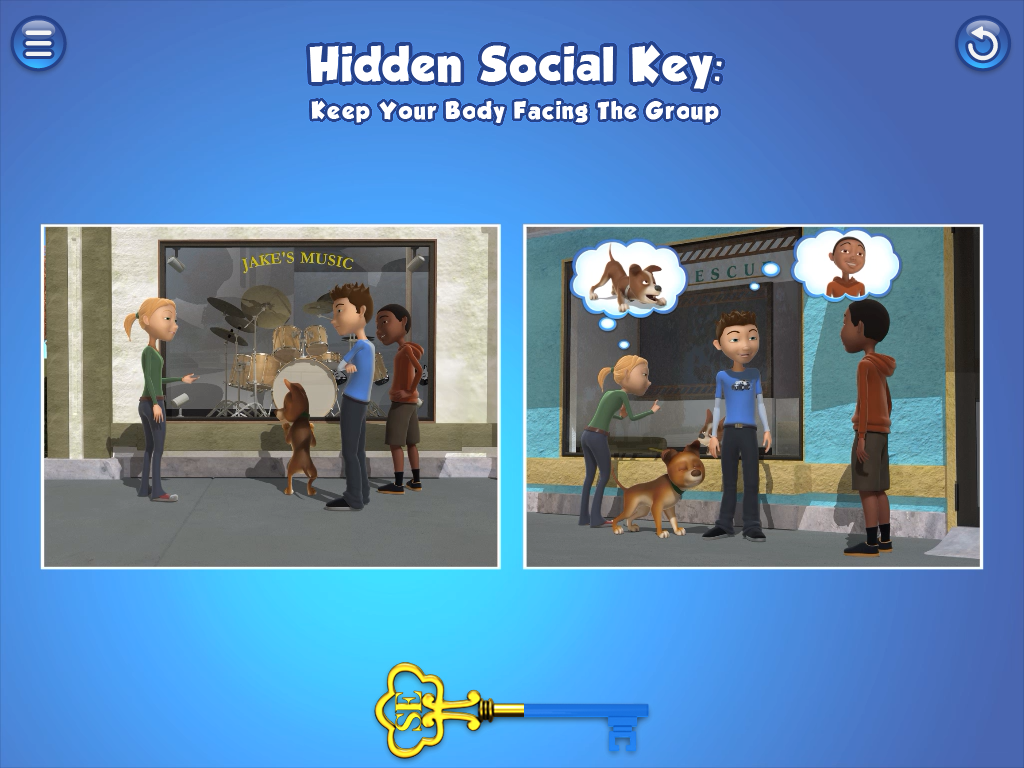
Interactive games are played with hints to help reinforce appropriate social interaction and reactions, plus videos like the one pictured above with two different choices to see the outcome.

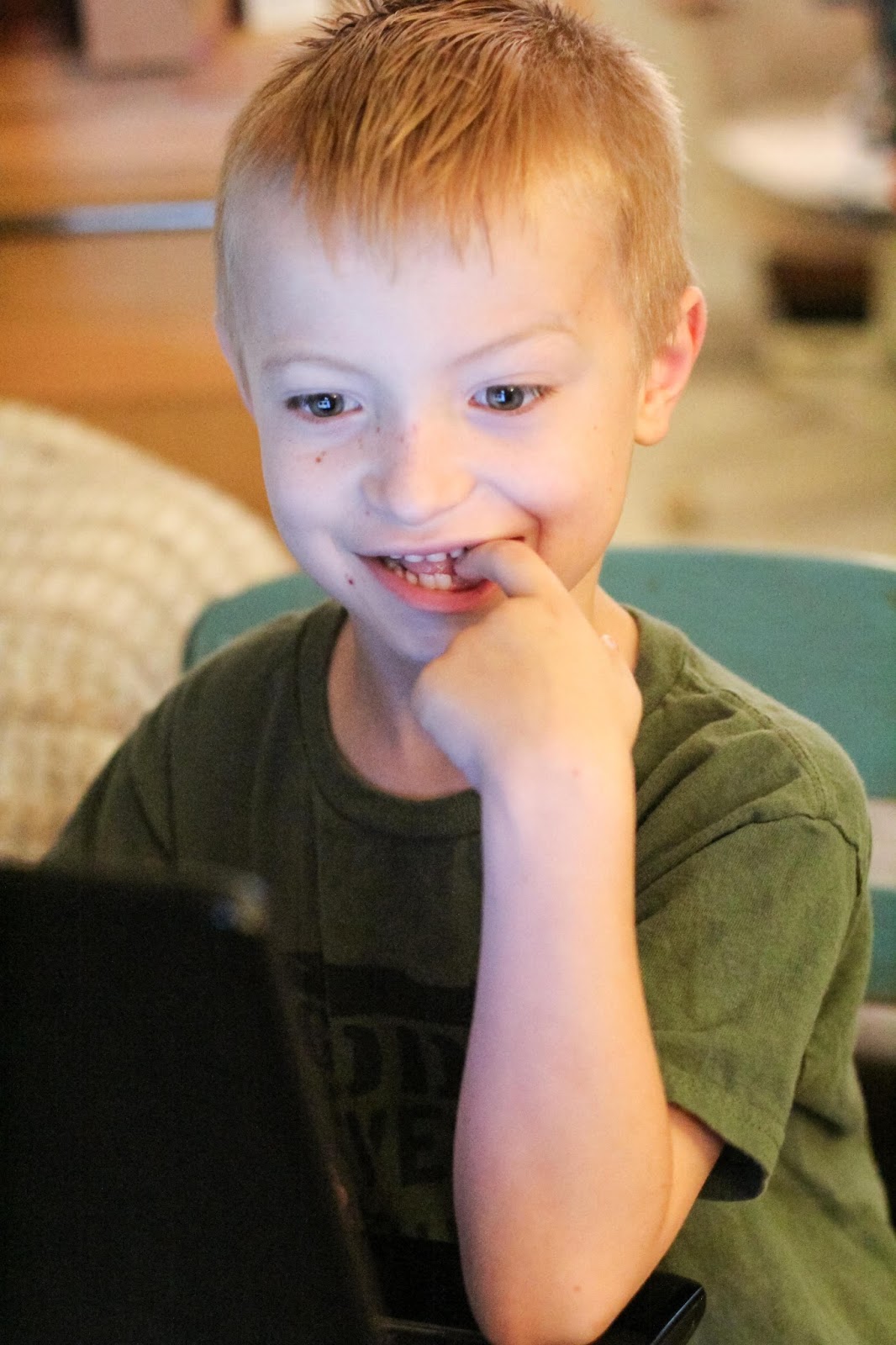
I think the photos speak for themselves for his opinion!

He loves it! He asks to play often. It’s pretty cool to watch the wheels turning in his head to think through the scenarios. I can’t wait to talk to his teacher later this month to see if it’s been helping in the class. No behavior notes sent home yet so here is hoping! We do this in the morning before school so he has some clues to help remind him during sticky situations.

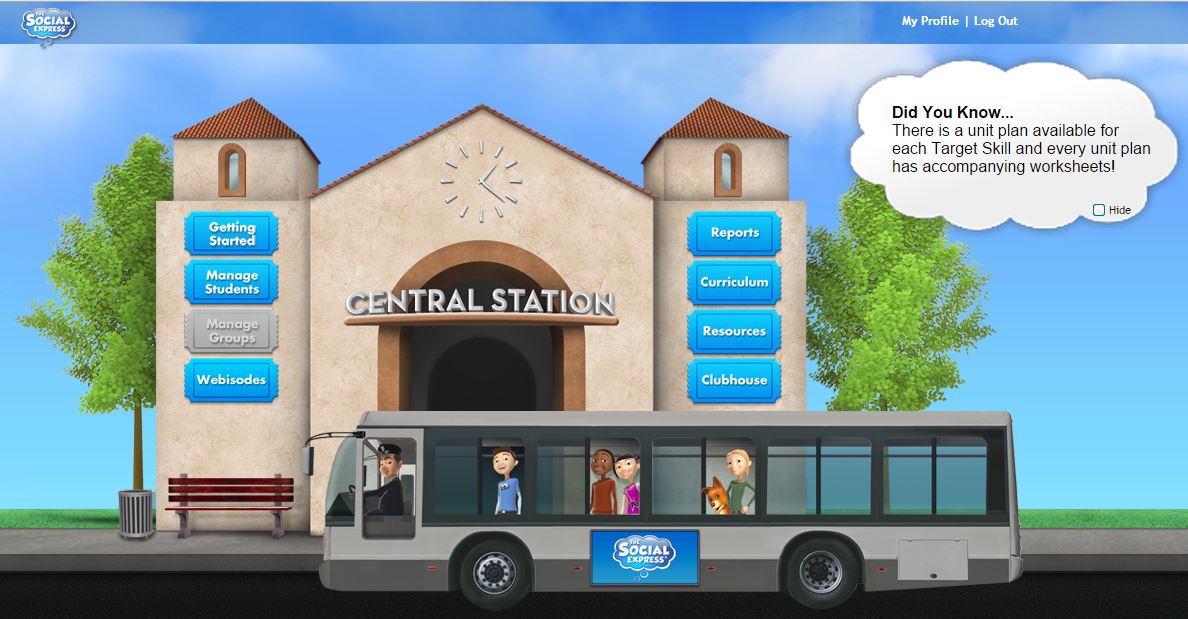
The parent dashboard makes it easy to adjust settings, track progress, and fully customize your child’s experience!

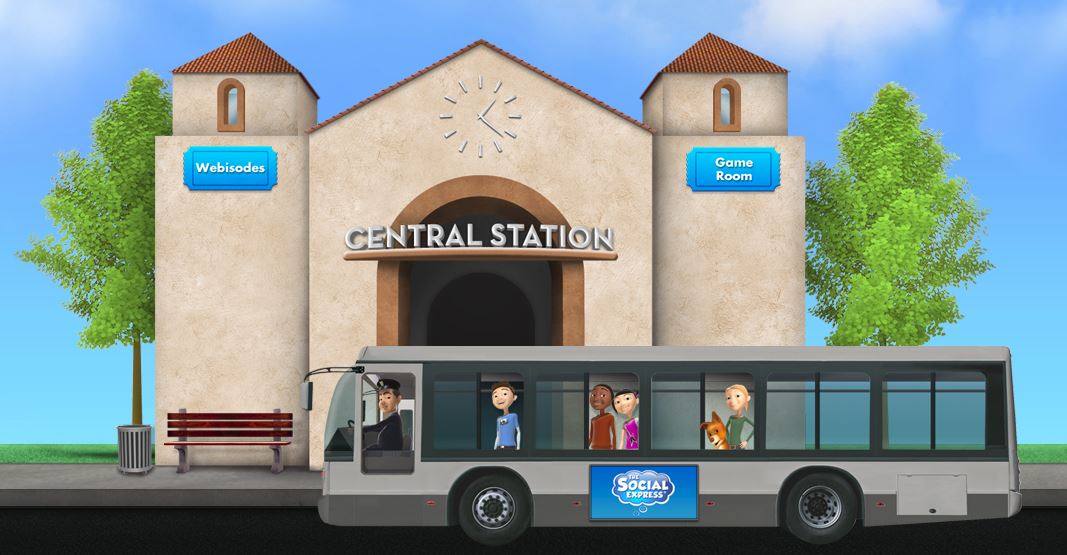
The child dashboard has access to game room and webisodes, both of which are fully interactive!

It’s also award-winning several times over including a Readers Top 100 Product and a Common Sense Media Learning Award!

Some of the best benefits include how to
● Identify feelings in others
● Understand the importance of “eye contact” (thinking with your eyes) in order to figure out what to say or do in social situations
● Read non-verbal social cues
● Identify appropriate coping strategies
● Sequence situations and infer what will come next
● Watch social situations unfold and see how behavior can have negative or positive consequences

Head over here to see how you can get started! They even have an app!

Common Sense Media has officially launched its updated Power UP Special Needs and Learning Difficulties Guide for Kids; and The Social Express II is included!

Being featured in this guide is a meaningful milestone for us. The Common Sense Media team spent months diving deep into research, interviewing experts and educators, and testing products with families and field leaders. Their goal? To identify high‑quality, thoughtfully designed tools that can genuinely support kids who benefit from learning in non‑traditional ways.

We’re proud that The Social Express II was selected as one of those standout resources. It reinforces our mission to help all learners build the social‑emotional skills they need to thrive through engaging, interactive experiences that make skill‑building feel natural and fun.

If you’d like to explore the full guide, it’s available for free on Common Sense Media’s website:
http://www.commonsensemedia.org/guide/special-needs

At Brighten Learning, we’re committed to creating tools that meet diverse learners where they are. Being recognized in this guide motivates us to continue innovating and supporting educators, parents, and,most importantly, kids.

We’re so excited that our social learning program is included in the Teachers with Apps Reviews The Social Expresslist of 12 Best Special Needs Apps of 2012! The post is by the Teachers with Apps team on their website.

We love being included with some of our favorite programs for special needs children. We’ve used learning programs by Conversation Builder and think that they build great programs to help children with language skills.

Here’s what Teachers with Apps had to say: The Social Express “Uses engaging scenarios to teach users, with high functioning Aspergers or other similar conditions, how to think about and manage social situations so that they are better prepared to develop meaningful social relationships and succeed in life.”

You can click here to read the full review.

[vc_row][vc_column][vc_column_text]Thanks to Jessica Chase of Consonantly Speaking website and the Time Timer®  team for a great blog post: Apps for Social Skills and Autism.

Jessica mentioned The Social Express when asked to name her favorite social skills apps.

Here’s an excerpt from the Time Timer interview:

Time Timer: What is the goal of speech therapy? How can it help children across the Autism Spectrum? 

Jessica Chase: Speech-Language Therapy is all about helping people communicate by any means possible.  People on the Autism Spectrum are so diverse. Some have much difficulty communicating at all, while others are great verbal communicators but have difficulty with social communication skills. Some may be working on using eye contact, some may be focusing on using an Alternative Communication device, and others may be learning how to maintain conversation topics.

It really depends on the person’s communication needs, but speech-language therpay can greatly benefit people on the Autism Spectrum – and the sooner they start, the better. 

TT: Which are your favorite apps for building social skills?

JC: I recommend the Social Express, Conversation Builder, Emotional Detective, Social Adventures and any of the Wonkido apps.

I also like the Fun Decks: What Would You Do At School If, What Would You Do at Home If, How Would You Feel If and Practicing Pragmatics.

Jessica also recommends The Social Express for Speech Therapists.

You can read the complete interview at the Time Timer’s blog by clicking here

Time Timer is a cool company that offers many different visual timers.  Each timer displays a wonderful large red (colorful) dot.

The dot becomes smaller as the time counts down. Time Timers are available in in physical clock form or as an app.

From the website, Time Timers are recommended for special needs children and youth.

Recommended by Autism and ADHD experts, the Time Timer is totally intuitive. It comforts toddlers, builds independence in youth with learning disabilities…

They also suggest ideas for using Time Timers to help children with autism. Here are two tips from the company’s Tip Sheet for Special Needs:

Succeed at timed activities:  “Finish your dinner before the red runs out.”

Learn to anticipate transitions: “Here’s what ‘5 more minutes’really means.”

I think we may all need help with ‘What 5 more minutes really means’. Like maybe when I’m watching a football game and my wife has a chore for me to do…

Join our free newsletter! Get insider updates from The Social Express, click here to join us![/vc_column_text][/vc_column][/vc_row]

The Flawless Foundation takes a stand for children living with brain-based, behavioral challenges by promoting educated awareness about neurodevelopment, providing evidence-based, holistic treatment programs and by advancing environmental and prevention focused research.

We envision a world where every child living with behavioral challenges feels flawless and is understood and embraced by society.

Thanks again to our amazing colleagues The Social Express Interactive Software for donating their software to us. At our conference in NYC, they were a hot ticket – school administrators, physicians, parents were so grateful to receive this awesome tool for helping children with social learning.


[vc_row][vc_column][vc_column_text]Thank you to Hillary Brumer for writing a great review.

The Social Express Teaches Special Needs Children Valuable Social Skills – Win Mac Copy From Developer

The Social Express, (iPad only. Mac and PC versions available) by Brighten Learning, Inc.  is an educational app that is designed to teach children with Autism, Aspergers Syndrome, and ADHD social skills. While the app is geared for certain populations, it does have practical application for children up to Middle School.

There are many apps in the App Store that teach emotions. The Social Express is not like any of these apps. In fact, it blows the competition out of the water.

Learning something one is not good at is hard. Imagine spending all day being forced to work on that one thing. The Social Express makes working on skills that are difficult for many children with Autism – social skills – easily understood. By employing concepts in Social Thinking, self-regulation, and problem solving skills in a video modeling way of teaching.

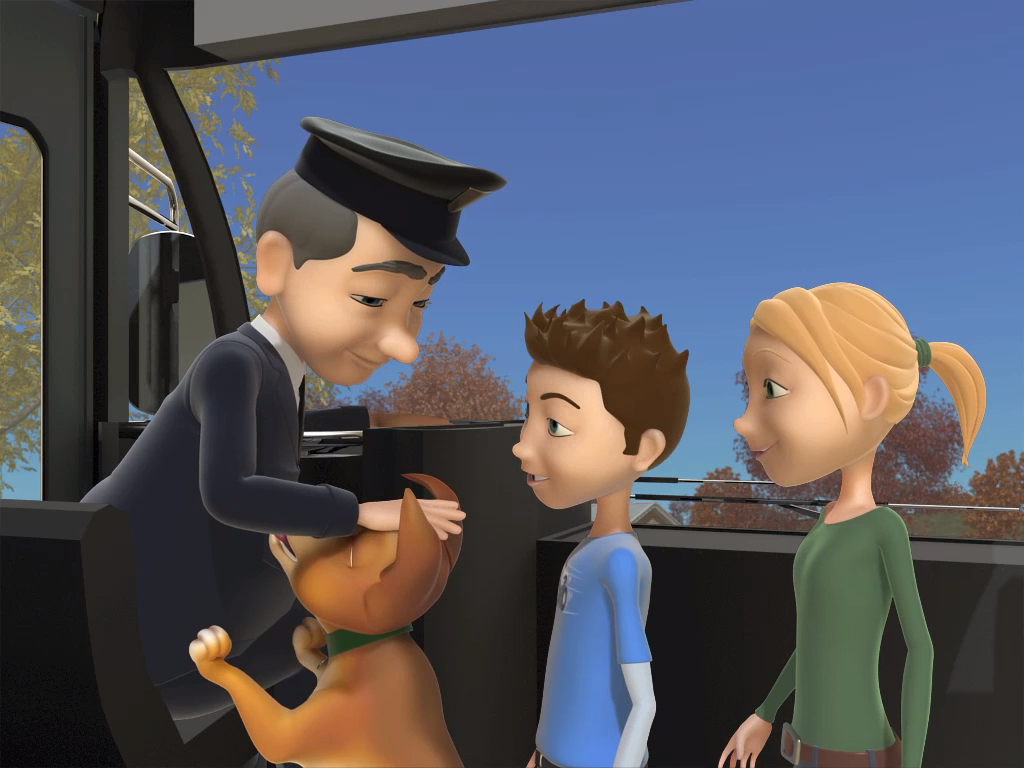
The app is well-designed. I was immediately blown away by the beautiful graphics. The UI  was not cumbersome during testing. The app is a simple bus that takes the main characters, Zack, Emma, and their dog Sunny into town.  From there, various social scenarios are played out. The child selects the appropriate answer. By using specific language, video modeling, and error-free learning that allows children to think, The Social Express  has it all.

The Social Express is a rather large download, so make sure to have enough space to use it. Printable materials are also available, however unless an iPad user has access to a wireless printer, they are not of much use. It would be nice to see printables sent to an annotation app or PDF form for ease of customizing for learners.

Our children are asking to be taught in a different way than we were taught. Many debates have been waged over the use of technology to teach specific skills. However, regardless of one’s viewpoint, we can agree that using apps such as The Social Express only help to make children’s learning success in a way that makes sense for them.[/vc_column_text][/vc_column][/vc_row]

[vc_row][vc_column][vc_column_text]Thank you so much to Jenna Rayburn from Speech Room News  for this great review.

Social Express App Review & PC/MAC Giveaway!

Social communication is a critical area of need for many children. Social skills are often difficult to teach, and even harder for students to initiate and follow through. I’m always on the lookout for another tool to add in my ‘social skills toolbox.’ One app people have been requesting to see a review of is The Social Express. The developers gave me a copy of the app to test it out for you! The Social Express is software designed to teach management of social situations using video models and interactive choices. It’s available as an app and also for Macs/PCs, meaning it works for all SLP’s!

You open the Social Express and meet the main characters. Max is the driver who leads you through the app. He introduced some sweet characters, including my favorite, Sunny, the pup!

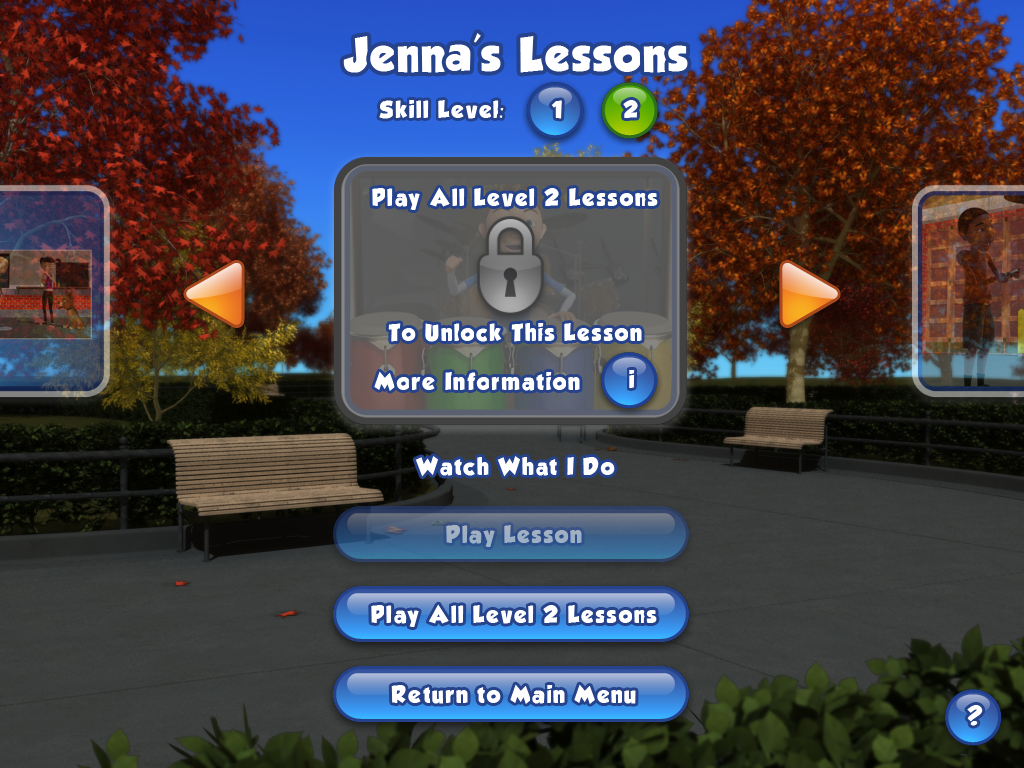
You can add multiple users – which is great! First, students work through each lesson to ‘unlock’ them.  Once you have passed the lessons the first time, you can go back to individual lessons as needed for review and instruction. There are 2 levels of instruction, based on similar skills with increased difficulty at level 2.

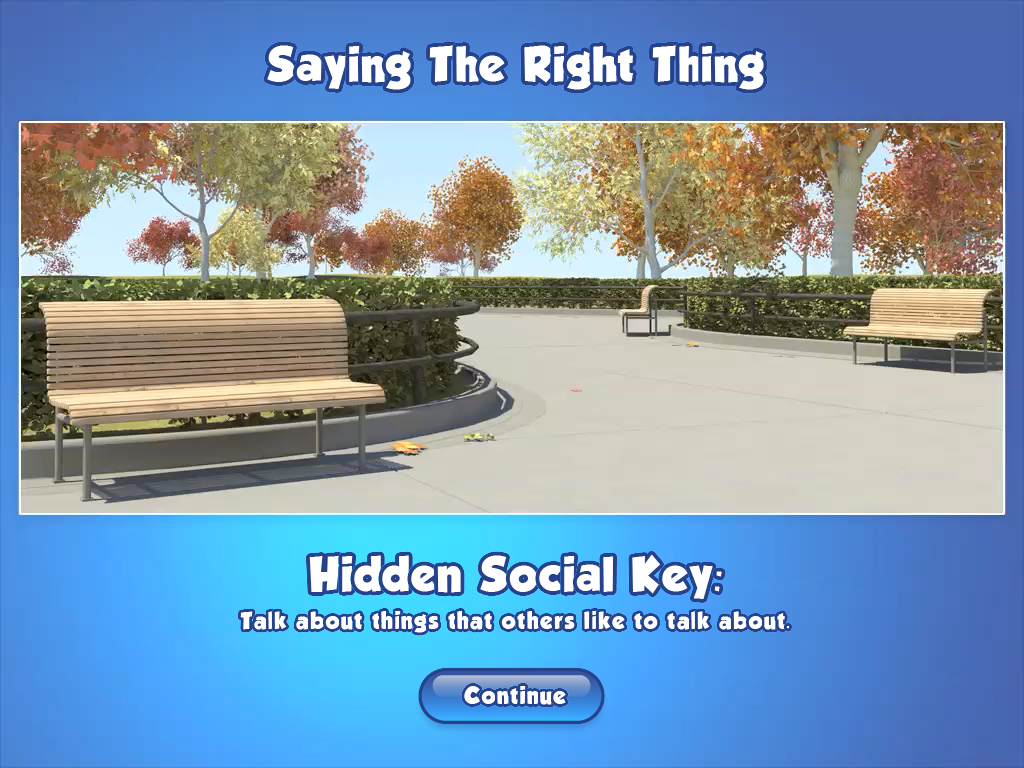
At the introduction of a skill the ‘Hidden Social Key’ is explicitly stated. There are teaching tips that you can turn on or off throughout the lessons. Social concepts targeted include: proximity and body language, eye contact, identifying feelings, coping strategies, conversational skills and figurative language.

My favorite part of the program is the part of the program where students answer questions to unlock the clubhouse! Student are presented with two video sessions and then they choose the one that demonstrates the skill.  I love it as a wrap up for the lessons to check comprehension of the skills.

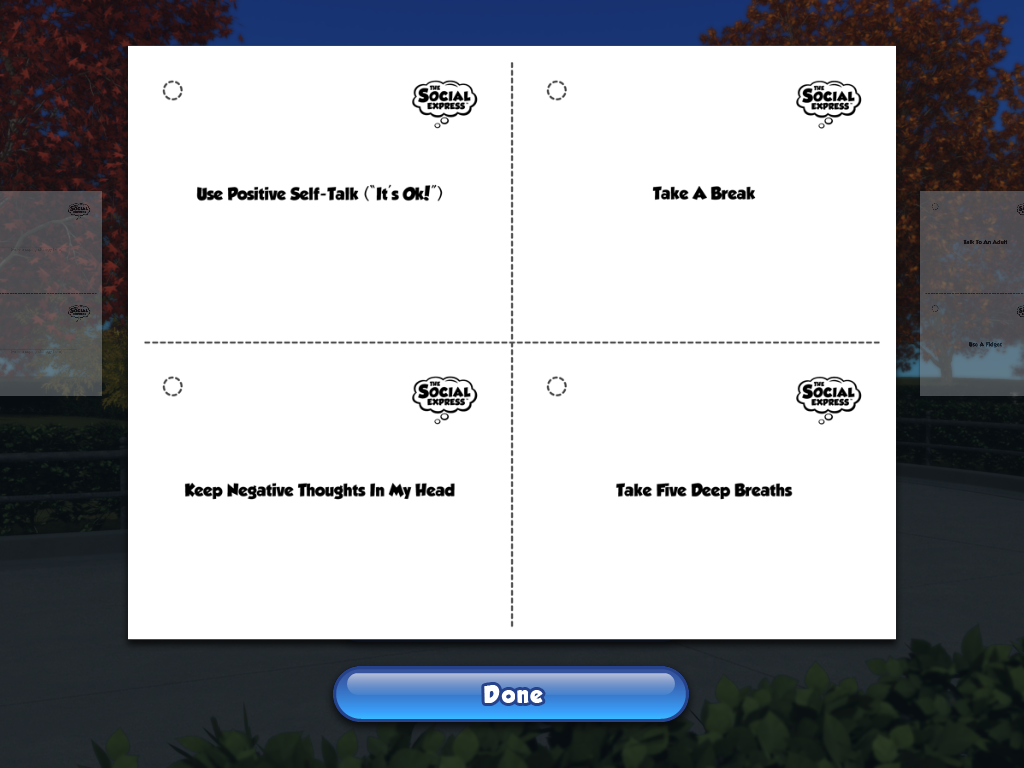
One of the things I love about the app is that the carryover and generalization activities are included! I especially loved these coping strategies! If you have a printer set up, you just print and go!

**Update: I spoke with Mary Anne, the SLP who developed the app. I asked her if there was anything else she’s like to point out to SLP’s considering purchasing the software/app. Mary Anne said,” An added bonus, in my opinion is the shots of the locations at the beginning of each of the activities, they are still shots of the locations which provide an opportunity to discuss the context….the who what when and other aspects of the location. It is based on Carol Gray’s social context concepts. Also I use it as a a supplement to the other materials/curriculm that I use when working with kids with social learning challenges.”

Pros:
-Video modeling is engaging to students.
-Two skill levels are included, making the app appropriate for children k-5
-Provides modeling of both positive and negative outcomes.
-It allows for multiple answer choices – providing opportunity to let students choose the correct response as well as the incorrect response to work through.
-Allows for pausing to give the therapist time to give instruction
-Available for the ipad, PC computers, MAC computers

-Printables are included!

Cons:
-The price tag hurts, meaning it may be out of reach for many therapist! I imagine it cost a lot to develop the app with animation, and you can tell a lot of work went into it!
-It includes a limited set of lessons, and I hope they will expand with updates!

Checkout the Lite version of the app for free here. The full version is here.

Through the end of March you can now purchase The Social Express  full version for $44.99 which is 50% off our introductory price of $89.99


The founder of The Social Express, Marc, has generously offered 2 giveaways for Speech Room News followers! He is going to give away one copy of the program for PC computer and one copy for Mac users. These versions are good for computers only – not the ipad version!

To enter the giveaway:
1. Like Speech Room News on Facebook
2. Like The Social Express Interactive Software on Facebook
3. Comment on the SRN thread on facebook with your name, email and preference for mac/pc

Goodluck! Contest ends on Saturday![/vc_column_text][/vc_column][/vc_row]