Educators have far exceeded all expectations during the most challenging school year in history

By Joyce Whitby

We support #SELDAY 2021 – March 26, 2021 – https://selday.org/

One silver lining about the school closings, quarantines and remote/hybrid learning  since March 2020 is that parents are more engaged in their children’s education than ever before in our history. Normally, parents are very engaged in early childhood education, elementary school and for students with special needs. We all know, however, that parents of neurotypical students tend to fade away in Middle School and High School. Partially because their burgeoning teen is actively pushing the parent away, demanding both privacy and control of their life.

For the past year the tables have been turned, and tweens and teens alike are at the kitchen table doing school work, with parents at their side. From an education perspective it is GREAT! Research shows that students with parents involved in their learning excel. From the parents perspective – they have a new sense of the amount of work their child is responsible for. From the students’ view it is mixed. Some students are really thriving in an environment that they don’t have to be quite so social. Others are lonely.

The problem is that we all collectively look at schools as a place to learn academics, which for the most part, is largely true. We really don’t have a good working definition for the purpose of schools. If we were to create a definition and say, “Schools are a place to learn academics.” We would be dead wrong. Immediately what comes to my mind is that this doesn’t include sports and the arts. Perhaps we could add in “School is a place to learn academics, sports and the arts”,  but again, we’d be wrong. We have seen literally millions of meals prepared and distributed to students in need over the past year, so I guess we could add in “Schools are a place to learn academics, sports, the arts and you get meals.” And yes, again we would be missing out on the essence of the school community which is so hard to nail down, because it is different from building to building, even in the same school district.

That essence is the “heart of a school” and it’s all about the expectations from each human being that enters that building. Even at virtual schools, the heart of the school is still about the expectations for genuinely caring about each other, respecting each other, and working together to learn and grow as a community. Granted, in some places this essence has been so buried for so long, it is hard to find. The words may be hung up on signs in the hallways, but they are posted as rules which must be adhered to at the risk of punishment. Again, during this unprecedented past year, this essence has been challenged like never before, as we prioritized connecting: students, disseminating academic lessons, and managing the ever changing schedule of A/B days, synchronous lesson time, asynchronous work time, deep cleaning, social distancing and wearing masks. It has been a superhuman feat by amazing educators nationwide (worldwide really) and it makes me lament for simpler days.

This makes me think about what I wished I had learned in school, and I’ll share a few thoughts with you. I wonder how many of these you will share with me?

When I was in school, I wished I learned that…

… my teachers were real people who didn’t live in the classroom when I went home at the end of the day (a misconception I cleared up by 3rd grade, yet I’ve met many folks who thought the same silly thing as a child.)
… it’s ok not to be best at everything, and that my best effort is what really helps me learn and grow
… my parents didn’t have the same benefit of a robust education that I had
… kids, who I thought were mean or snobbish, were just as frightened and shy as I was
… schools were for more than just the three R’s. They were also for learning how to be a good friend, a contributing member of a community, and an important part of an exciting new tomorrow and the world that was yet to be seen and explored
… that building my EQ (emotional quotient) was just as important as my IQ
… That social emotional learning (SEL) is important for everyone

I think about the students today and what they may have lost, and what they have definitely gained. If you have been reading my posts, you know I am an eternal optimist, thus, I believe that the lessons that students have learned will outweigh the temporary loss. The overarching lesson is that ‘when life hands you lemons you make lemonade’, and yes, this year was horrendous in terms of the loss of life and the disruption to our economy and routines like going to school every day, but we will emerge stronger, and more proficient at things we didn’t even know we could do.

As an educator and a parent, I think that the first thing we need to rebuild is that very precious “essence of our schools” and focus on basic mental health and emotional stability for all – students, teachers, parents, and staff. We can’t deny the trauma that we have all gone through, and yes, is still not over. We need to learn how to recognize the impact of that trauma, and work together to address the very real fears and stress that we carry, to find a common path out of this together. Let’s rebuild that essence of our school community brick by brick.  In short – SEL is more important now than ever before. 

Marc Zimmerman created Social Express to help his autistic twin boys understand the world around them. Now the game is helping kids all over the world.

Software helps special needs children

Musician Marc Zimmerman had been disappointed with how schools handled his twin autistic boys for some time. As a result of autism, his third-grade sons needed extra help developing social and emotional skills. Zimmerman tells Guideposts.org:

“[Teachers] would send home a worksheet and [ask you to] plug your son’s name into this story [as if that would help the kids better relate to the story]. I was like, ‘there is no way that this is going to sink in.’”

In 2009, Zimmerman had an idea.

As he was dropping his sons off at school, a song idea popped into his head.  Its lyrics were all about his third-graders and how they could (and couldn’t) relate to their peers. He dubbed the song “Brighten Learning.”

Inspired by the song idea, with the help of his wife, Tina, and a host of academic researchers, a speech pathologist and a behavioral therapist, Zimmerman created an interactive software program called Social Express, geared specifically towards children and young adults who, like his sons, needed more than just a piece of paper to help them relate to the real world.

Social Express takes users through different sets of experiences, called “webisodes” in the program, that help them learn how to think and manage many kinds of social situations.

Each webisode is designed to take the user on a journey, letting the child (and their parent) decide which action to take. In one episode, a girl wants to sharpen her pencil and is told no by her teacher; the child and parent get to choose, what should the girl do next? How would the interaction with the adult make her feel? Each choice holds positive or negative consequences for the user, which explain how certain actions are interpreted in a social setting.

The program also works on a scale, meaning children build upon the skills they learn. If, for instance, a child completed the webisode featuring the girl and her pencil – titled “No Means No” – they would graduate to a new webisode. In many ways, Social Express is just like any other video game children play, except instead of beating the bad guys or winning the race, the way for users to get to the next level is to understand how and why social interactions impact others.

Zimmerman admits getting his brainchild off the ground was no easy task. The family contributed their life savings and persuaded angel investors to put a stake in the program. They were able to recruit some of the best animators in Hollywood – think Pixar-level – to donate their talents.

Still, convincing parents and educators that his game could actually help their children and students more easily learn social queues was difficult.

“A lot of people were like ‘how is a computer program really going to change a kid? I want my kid interacting with others; the last thing I want them to do is be spending more time on their computer,’” Zimmerman explains.

It was his own experience, sitting down with his sons to play the first episode of the program that convinced the businessman he had a project worth fighting for.

“We were sitting on the couch,” Zimmerman recalls. “Our legs were touching, our arms were touching, they were engaged and they were conversing with me,” he says, a rare experience for them, because of his children’s autism. “I had a feeling like ‘okay this is bigger than just them.’”

The Social Express is now in more than 100 schools in Encinitas Southern California school district and Zimmerman hopes to soon reach more than 15,000 schools across the country.

The father, who struggled with his children’s autism diagnosis in the beginning, says he and his wife have been able to have a fuller perspective on the disorder, thanks to this program.

You have to shift your whole focus of what your expectations [for your kids] were and now what your reality is,” Zimmerman says of parenting children with autism. “We prayed. We tried to be spiritual and know that there is a bigger plan and maybe now we know. Through this experience with our kids we’ve been able to bring a program to the world and leave a legacy.”

He wants that legacy to help parents desperately searching for ways to connect with their own children.

“My hope for the Social Express is that I can provide parents a tool to be able to feel like they are contributing to their son or daughter’s well being. That they can actually do something outside the therapist; that they feel empowered.”

He also hopes his family’s personal journey can change the way we view autism and children who suffer with social and behavioral disorders.

“It’s not a death sentence,” Zimmerman says of getting an autism diagnosis. “From my perspective it has taught me to understand that people have strengths that are unseen. To harness those strengths, [just] love people, whoever they are, whatever their problems may be, for who they are.”

https://www.guideposts.org/positive-living/this-video-game-is-helping-kids-with-special-needs/page/0/1

By Tiare Dunlap @tiaredunlap

04/29/2016 AT 01:50 PM EDT
Shari Grande and her husband call the day their two-year-old son Elijah was diagnosed with autism “the day of nevers.”

“His physician told us he’ll never talk, he’ll never interact, it was just one ‘never’ after the next,” Grande, 49, tells PEOPLE.

Eleven years after his diagnosis, Elijah has gone on to accomplish much of what was deemed impossible. The Sunnyvale, California, teen even attends a mainstream public high school.

Grande, a clinical social worker, credits her son’s success to a number of interventions, including the learning app The Social Express.

Keep up with your favorite celebs in the pages of PEOPLE Magazine by subscribing now.

Created by parents Marc and Tina Zimmerman, whose identical twins Jason and Jared have autism, The Social Express is an interactive software that helps kids with autism learn how to read emotions, empathize and react in social situations.

Parents of Twins with Autism Open Up About the App They Created to Help Kids Develop Social Skills: It’s ‘Incredible’ to See Its Impact| Twins, Autism, Medical Conditions, Real People Stories

The San Diego, California, couple invented the app as a way of giving their sons the tools they needed to ease the social isolation they experienced every day.

“It was very difficult because all of our nieces and nephews are highly social and have always had a lot of friends and play dates,” Marc tells PEOPLE. “Our kids never had many play dates and if put into a social situation, they would just go sit alone in a corner.”

However, after seeing how their sons responded to technology and cartoons, the Zimmermans enlisted experts to write a software program that could model social situations with engaging animation. The parents took turns sitting with their sons as they watched the animations, and helped them talk through their decision-making process when asked how a character on the screen should react.

“They would sit down to use the program and engage with us,” Marc recalls. “That was the tough part – getting them to engage. Once they were engaged we saw them speaking more to each other and acting more comfortable in social situations.”

Parents of Twins with Autism Open Up About the App They Created to Help Kids Develop Social Skills: It’s ‘Incredible’ to See Its Impact| Twins, Autism, Medical Conditions, Real People Stories

Now 14, Jason and Jared are best friends attending a mainstream middle school, earning straight As and playing in a band. “They’re different kids than they were when they were diagnosed,” Marc reflects.

The twins’ case is not unusual. Since its launch in 2011, use of The Social Express as a teaching tool for kids with social differences has been adopted in 70 countries and in hundreds of schools around the U.S.

“We get emails from around the world from parents telling us about how it has helped their kids,” Marc says. “It’s just incredible to see how something we created to help our own kids has had such a bigger impact than we would have ever imagined.”

Parents of Twins with Autism Open Up About the App They Created to Help Kids Develop Social Skills: It’s ‘Incredible’ to See Its Impact| Twins, Autism, Medical Conditions, Real People Stories

That impact is not lost on moms like Grande, who says the program helped her son to open up and fit in.

“He’s just a nice, open and bubbly kid and he has become my greatest teacher,” she says.

http://www.people.com/article/social-express-california-couple-creates-app-social-skills-twins-with-autism

By Heather Lowe on Thu, 21 Apr 2016

It was the winter of 1997, and as my grandmother hung up the phone, tears gradually began to stream down her face. Another one of her friends, a close one, had died. I wrapped my arms around her waist and hugged her as she cried. It was the first time in my life that I can remember not just feeling sad for someone, but feeling sad with that person. It was a powerful memory of empathy for me.

Psychologists refer to empathy as a social-emotional skill, a term for the cognitive skills that guide our social and emotional behaviors. Social-emotional learning has recently become a popular topic in education reform, among both education researchers and educators interested in its pedagogical applications. A large body of research has shown that socio-emotional skills support learning, by enabling students to do everything from sit still during a lesson to understand the feelings of their peers. Other studies go beyond outcomes in the classroom and show that self-control at 3 years old predicts health, wealth, and crime from adolescence through early adulthood. One of the most popular social-emotional topics is grit, which psychologist Angela Duckworth has argued is more predictive of success than IQ or personality traits. So how will the social-emotional learning domain transform as educators continue to teach this moving target of skills? Digital technology seems to have some insights.

With the rise of personalized learning and digital education tools for math, history, science and other core content areas, there has also been the development of social-emotional digital games. My initial query revealed approximately two dozen social-emotional apps available for download on the App Store. Some apps focus on emotional intelligence; while others focus cognitive brain breaks or empathy. Most of the apps focused on identifying emotions target younger children, while the games geared at understanding the perspectives and experiences of different people could be used by teenagers or adults. However, the presence of these games on mobile platforms makes them accessible to a much wider group of people.

Over the past two years, low-income families’ access to smartphones has increased from 27% to 51%, closing the “app gap” slightly faster than the disparity between high and low-income home internet access. Mobile platforms appear to have more potential to level the playing field of access to digital educational tools. Simultaneously, the time children ages 8 and under spend on mobile devices has tripled since 2011. But according to researchers at the University of California, the more time children spend in front of the screen could be inhibiting their ability to read social cues. So, if you are like me, it can be difficult to fathom learning empathy or other social-emotional skills from technology instead of human interaction, like I did with my grandmother.

While some may be skeptical of social-emotional apps, there are certain scenarios in which they can be quite powerful. Speech-language pathologists often use these games to help children on the autism spectrum learn nonverbal cues to benefit social interactions. One program, The Social Express, is a series of interactive webisodes and apps that can be used by the learner independently, or with a teacher in a group. The Social Express allows learners to engage in a variety of social situations and adds a level of comfort that would be inaccessible without the game’s removal from reality. The app places a user in different social scenarios, often focusing on social skills that those with autism may struggle with, such as eye contact. Even though the app can improve a child’s behavior in social settings, parents and educators should employ the app as a supplemental, not primary, solution.
The Social Express challenges players to take the perspectives of others.

Not only are apps being used to teach social-emotional skills, but so are beloved children’s television characters. A few years ago, WGBH and Tufts University transformed the children’s television show Arthur into an interactive, digital comic book. Teachers paired 1st and 4th graders together to complete lessons that focused on prosocial behavior, positive decision-making, and character development. The computer game focused on these facets of social-emotional learning in an effort to proactively prevent bullying. In addition to the engagement of a game, it was effective because Arthur prompted children to have discussions with their peers about the dilemmas in the story. Thus, the verbal reflection with peers and a teacher about situations in Arthur improved social-emotional literacy. Results from a study evaluating the game’s efficacy revealed that children demonstrated increased awareness, understanding, and vocabulary about bullying.

However, there are cases where social-emotional games and programs can be used to manage students in ways that may not be beneficial to child development. The game Zoo U recreates common social scenarios at school, and children pick which dialogue option for their character to express in a tough social situation. The program provides educators with an assessment of a student’s competency in different social-emotional areas: emotion management and identification, impulse control, empathy, cooperation, communication, social initiation, and problem solving. The assessment provides concrete examples for teachers to target and improve specific weaknesses that the assessment identified. But assessments often become a student’s label for a teacher, especially when a teacher lacks the time and resources to spend quality time with a student. A seminal study by Robert Rosenthal at Harvard found that giving a teacher a label of a student’s intellectual capacity affects how that teacher instructs them; teachers gave students with a label of intellectual growth more positive feedback, overtly and subtlety, throughout the learning process. Providing an assessment about a student’s level of empathy, for example, could provide a teacher with a label that could be misinterpreted as a character flaw.

While social-emotional apps may present a way for those with autism to learn social cues in a safe environment, the apps could also encourage a quick-fix solution to a behavioral problem in cases when medical professionals should be consulted. Though social-emotional apps can proactively address bullying and promote awareness on how to address it, other games may provide a social-emotional assessment of a child that runs the risk of misinterpretation. So, should social-emotional apps solve children’s behavioral problems or should we be finding more holistic solutions? The current body of research suggests that methods to improve social-emotional outcomes must be comprehensive and use technology as a tool, not a solution.

When Marc Zimmerman’s twins were given an autism diagnosis, he decided to create something to make their lives better.

By Jamie Pacton

Zimmerman family Courtesy Marc Zimmerman

Marc Zimmerman has been a rockstar, composer, real estate broker, and software startup entrepreneur. But his latest project—founding and running the company responsible for the incredible social situation simulator The Social Express—is the one closest to his heart and home.Marc and his wife Tina are the parents of 14-year-old autistic twins Jared and Jason. When the boys were younger, Zimmerman wanted to create something that would help them navigate tricky social situations, reinforce what the boys were learning in therapy, and be something they could watch and learn from together. With this seed of an idea, Marc invested his life savings, made concrete plans, and now, with the help of Tina and many others, The Social Express is a reality.

So, what exactly does The Social Express do? According to its website, it, “provides an opportunity for the user to become more socially competent and have successful social interactions.” Or, put in simpler terms: It helps kids practice a variety of social situations in a low-stakes setting. Through colorful, expertly-animated videos and thoughtful storylines, kids can learn more about self-management, group participation, conversations, attentive listening, conflict management, relationships, non-verbal communication, and more. Kids watch the videos, then make choices that move them further along in the storyline. There are webisodes, e-books, music, and a “clubhouse” for social networking. It’s available for the computer or as an app, and Zimmerman notes that his sons and many other autistic kids really appreciate using technology as a vehicle for practicing social rules and conventions.

Social Express Social Express

Although I was skeptical about how much my children—a neurotypical 5-year-old and a non-verbal autistic 7-year-old—would take to the videos, I’m happy to report they were both enthralled by them. Together, we watched several in which kids tried to figure out which social choice was the most productive—and all of us appreciated the interactive aspect of The Social Express. We were also able to have a bit of conversation about the scenarios and why one way of acting was more positive than another in that social situation. I appreciated the conversation starters and the fact that this was low stakes, since social interactions in the real world cause both my children a lot of anxiety.

And my kids aren’t alone in appreciating The Social Express. Zimmerman reports that it is being used in homes and classrooms in more than 70 countries around the world, and it’s won quite a few awards, including being a part of the U.S. Department of Education’s National Education Technology Plan. Some schools are even using it with entire populations of students—not just autistic ones or those with special needs—and they’re seeing tremendous positive gains in social engagement. In fact, based on this success across student populations, Zimmerman is working on an anti-bullying program, similar to The Social Express, that will help kids figure out how to stop bullying in a variety of situations. He’s also planning on rolling out simulation programs to help with life skills and job training for older kids who are transitioning out of school.

The Social Express is a great program, and I love that it was inspired by the Zimmermans’ desire to help thier sons move more easily through the world. I’m hoping that with time, patience, and through practicing in many social situations both simualted and in the real world, my kids can see similar benefits to the Zimmerman twins, who are now artists, play in a band together, attend school, are good friends, and who are beginning to think about what the future might hold.

You can buy The Social Express here, and use this discount code at checkout to take 30% off the annual subscription: COOLTOOL. The code expires April 30, 2016.

Jamie Pacton lives in the Pacific Northwest where she drinks loads of coffee, dreams of sailing, and enjoys each day with her husband and two sons. Find her at www.jamiepacton.com and Twitter @jamiepacton.

Social and emotional learning (SEL) is the cornerstone of emotional intelligence, as these abilities do not come naturally for some special education students. Children in special ed settings need to have their confidence, courage, and emotional awareness nurtured in order to successfully play, work, cooperate, and be productive in their studies. We have all heard that technology can be a great playing-field leveler in a classroom with diverse learners. It can also assist in providing social and emotional skills. Let’s face it — the digital lifestyle is here to stay, so using digital technology to enhance SEL makes perfect sense.

However, I have yet to encounter research that focuses on the effectiveness of using apps designed solely to enhance the social and emotional health of children. Researchers and educators have only begun to closely investigate the impact of these technologies on SEL. For special ed teachers, that research can’t come soon enough.

Young children acquire and utilize their initial social skills mostly in the context of play and shared activities. Through play, they form their first interpersonal interactions and develop important social skills related to empathy, cooperation, conflict resolution, and self-control, which will be used throughout life to maintain healthy relationships with others.

9 Skill-Building Apps

Several apps can be used in the classroom or at home to assist in reinforcing social and emotional learning while also helping kids cope with the pressures that we all face. These apps can help teachers and parents in addressing students with special needs, and many are also available in a web format.

    1. Breathe, Think, Do (Sesame Street) teaches children to keep calm and carry on by introducing three possible strategies for working through problems. It touches on familiar emotional challenges such as problem solving, self-control, planning, and time on task. Intended for very young children, this simple app gives players different scenarios in which the Blue Monster character needs to regulate his or her emotions using the breathe-think-do technique.
    1. Touch and Learn — Emotions (Innovative Mobile Apps) is chock full of wonderful photographs representing four different feelings per page. The child is prompted to match the verbal cue with the appropriate photo. This app focuses on helping kids read body language and understand emotions by looking at pictures and figuring out which person is expressing a given emotion.
    1. Avokiddo Emotions provides opportunities for younger children to explore a wide range of feelings through several silly characters and a plethora of props. This app incorporates activities to help children understand the subtle cause and effect of facial expressions. The main idea is exposing young children to a variety of feelings and helping them grasp emotional connections with those feelings.
    1. Emotionary (Funny Feelings) is designed to give a wide age range of kids the tools and skills to express themselves well in our world of emoticons. The app has become a popular resource for the special needs population. This collection of emotions and funny feelings now allows users to draw their own emotionary “selfie” to match how they are feeling.
    1. GoNoodle is a wonderful web-based way to get younger kids out of their seats and moving. These short physical activities provide brain breaks that can help keep them focused throughout a long day. Studies have shown that physical activity increases blood flow, which increases concentration and attentiveness. This enhances students’ ability to acquire and recall information. These activities make them cross the mid-line of the body, engaging both sides of the brain. GoNoodle provides teachers with fun, interactive ways to get kids moving and feeling good about themselves.
    1. IF. . . The Emotional IQ Game (If You Can) promotes teamwork and collaboration, accentuating how to be in touch with our own feelings and the feelings of those around us. With this app, kids (recommended ages 9-11) learn to listen, make friends, and deal with bullying in an adventure story/game format. IF’s motto: “Play Learn Grow: Succeed at school with friends in life!” This pretty much says it all.
    1. The Middle School Confidential series is a powerhouse of SEL lessons by tween/teen expert Annie Fox. The book/app series for ages 8-14 is a graphic novel sequence focused on making stepping-stones out of stumbling blocks on the road to becoming a teenager. Readers follow the adventures of a group of seventh-grade friends trying to navigate the ever-changing drama of their friendships, families, and school. Excellent resource!
    1. Stop, Breathe & Think (Tools for Peace) promotes mindfulness, meditation, and compassion for middle and high school students and adults. Research has shown that people can develop kindness and compassion by focusing on them through mindfulness and meditation practices. You can cultivate your frame of mind in a very short timespan with simple meditation.
  1. I would be remiss if I didn’t include the The Social Express in this collection of apps. Its quality content keeps students engaged and on the path to mastering healthy social and emotional skills. Research-based webisodes give kids the exposure necessary to develop meaningful relationships and become more socially competent in all realms of life. This program covers the gamut from preschool through high school with a robust SEL curriculum.

The Puzzle of Tech Use

Most students with or without disabilities can and do benefit from SEL-focused technology in the classroom. Incorporating these tech tools should increase student incentive to learn through individualized lessons, especially when tailored to a student’s specific needs. When done well, tech not only reinforces key SEL skills that children need to learn, but it can also drive student enthusiasm and promote self-assurance.

This topic may seem like an oxymoron since we want children to learn how to focus during “real time” and how to live with less tech. A wonderful TED Talk addressing this conundrum is Sherry Turkle’s “Connected, but alone?

Do you know of any digital SEL resources for special education students? Please tell us about them in the comments below.

BOS Header

TWO KEYS TO A GREAT MORNING WITH THE SOCIAL EXPRESS

You know what I’ve been looking for lately? A recipe for a great morning! School days are just so chaotic with missed alarms, and learning skills like tying shoes and of course disagreements over what counts as breakfast. (What, mom?! Those cupcakes have protein, right?!)

Can we talk about this sweet boy for a second?

He is a social bug! He loves friends and makes them wherever he goes, whether they are 5 or 95! Earlier this year, we found out he has SPD, which is short for Sensory Processing Disorder. The icon for it is a rainbow-colored horse, because no two kids are the same! In Andrew’s case, it basically means that he has a hard time processing motion (excitement= lots of big motion here!) but it also effects his emotional regulation and ability to pick up on social cues (he has a super hard time with both!) Where most 7-year-olds would be fine with negotiating friends wanting to do something different, Andrew can get a little hands-on in trying to change the situation to what he wishes it were. It can get tricky sometimes, because expectations are high, and he doesn’t always meet those. I’m thankful for good friends, but still- it’s not alway easy for him or for us.
It’s something that makes your heart hurt as a parent, seeing your kiddo struggle with something that their peers do just naturally. I’ve been looking for some ideas to help Andrew be the best student and friend he can be, and to help our mornings go a little more smooth! (Sometimes we get a little distracted 🙂 )
Andrew’s therapist first recommended The Social Express to us. I think I was a little skeptical of anything really clicking for Andrew, but I’ve been happily proven wrong! See, they wanted to create a program for kids to make social learning easy for them. Our son is a visual learner. I could tell him to use his words, and not his hands, but it just goes right out the window in the moment. We needed a more visual solution. Enter inThe Social Express!

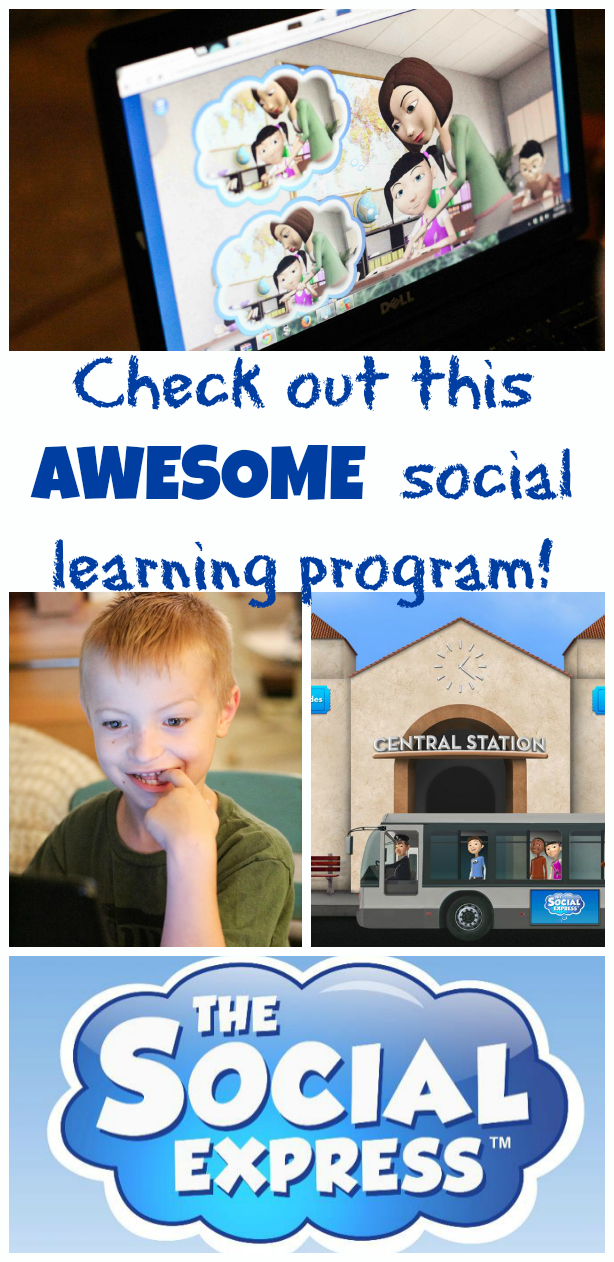
Interactive games are played with hints to help reinforce appropriate social interaction and reactions, plus videos like the one pictured above with two different choices to see the outcome.

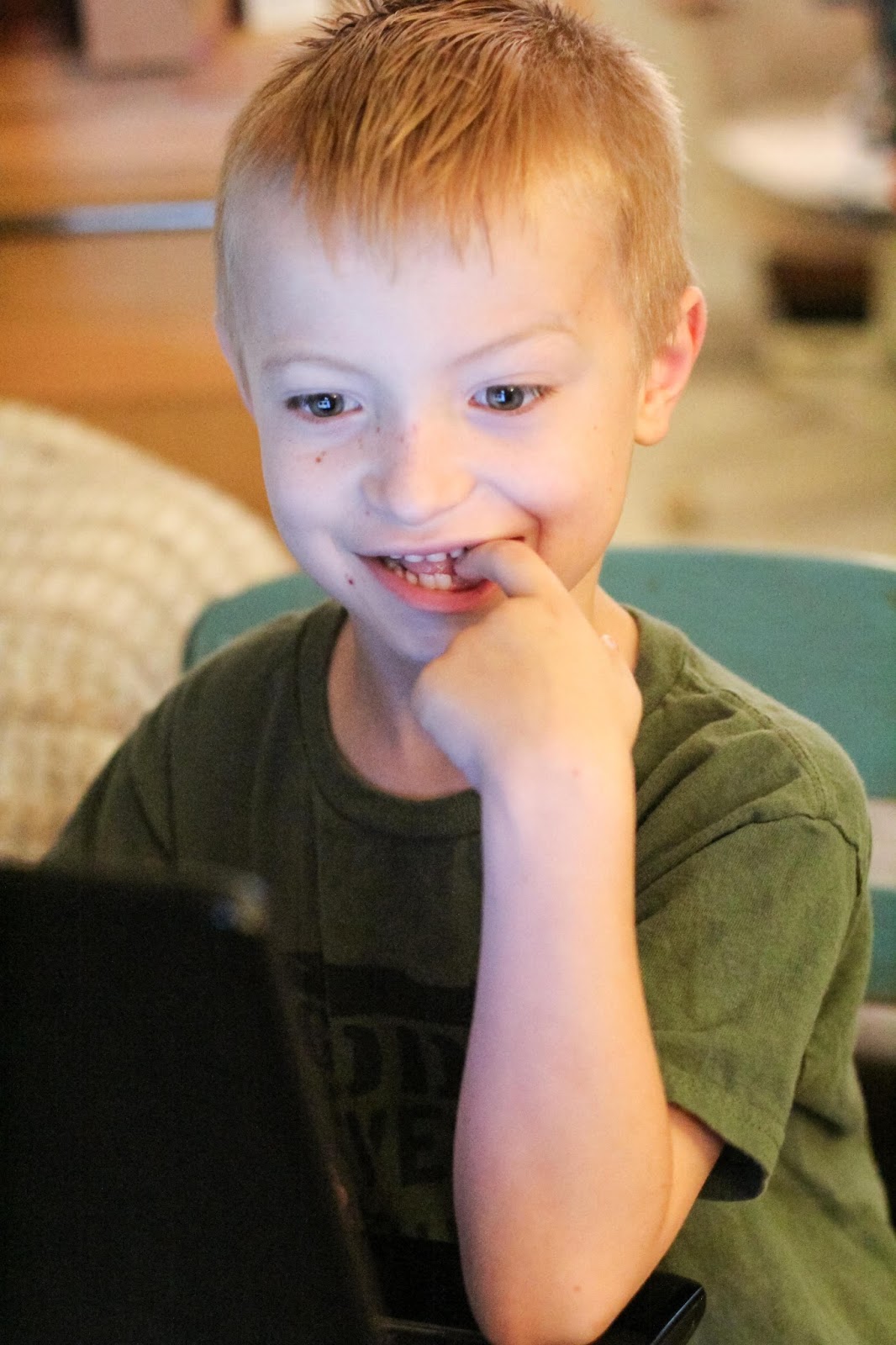
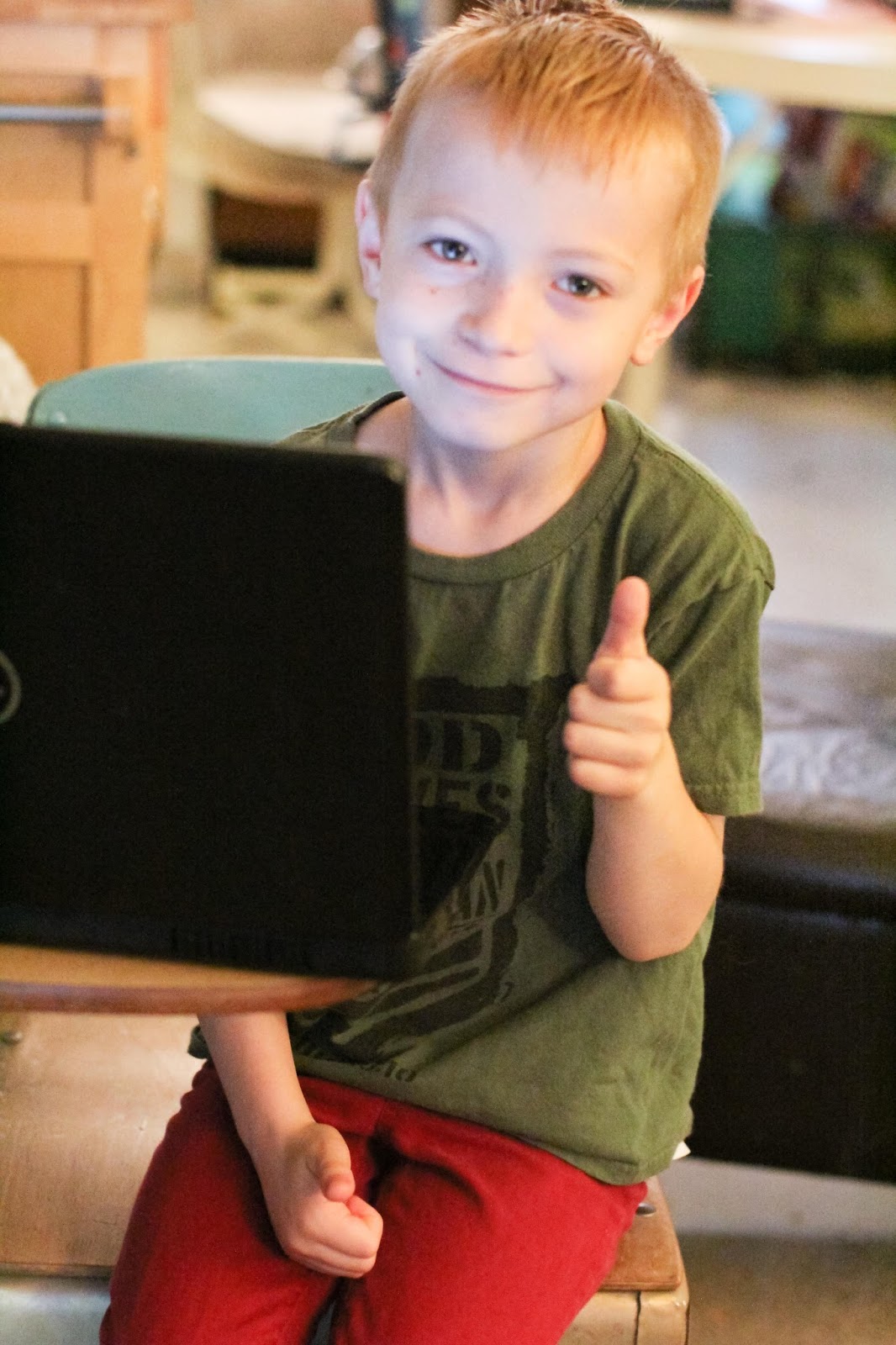
I think the photos speak for themselves for his opinion!

He loves it! He asks to play often. It’s pretty cool to watch the wheels turning in his head to think through the scenarios. I can’t wait to talk to his teacher later this month to see if it’s been helping in the class. No behavior notes sent home yet so here is hoping! We do this in the morning before school so he has some clues to help remind him during sticky situations.

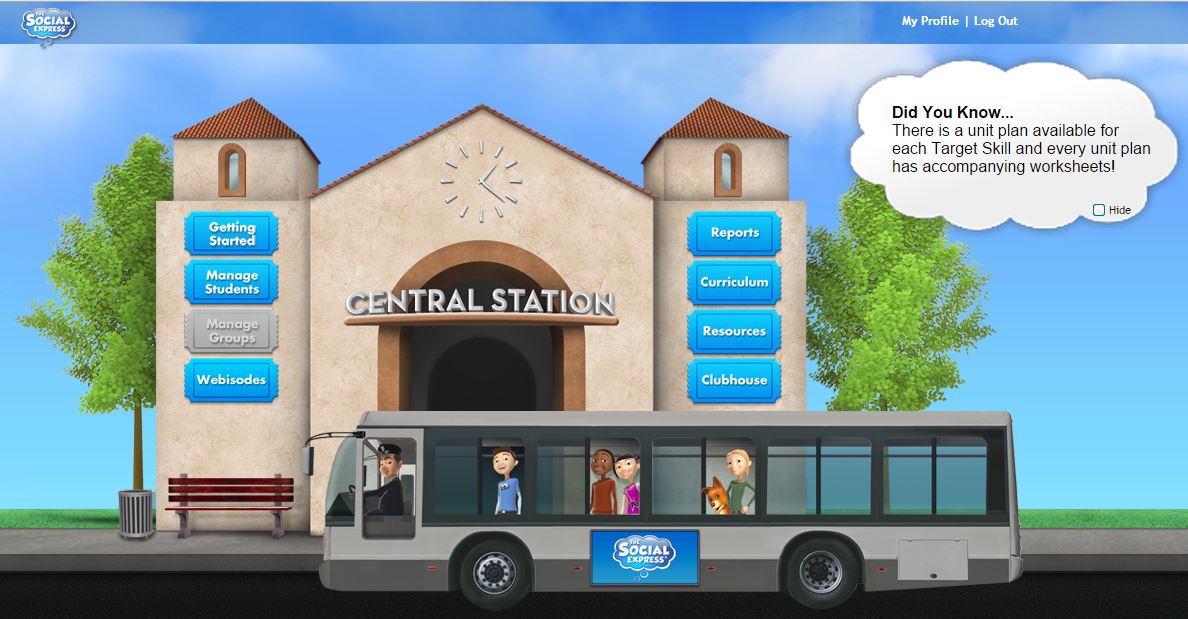
The parent dashboard makes it easy to adjust settings, track progress, and fully customize your child’s experience!

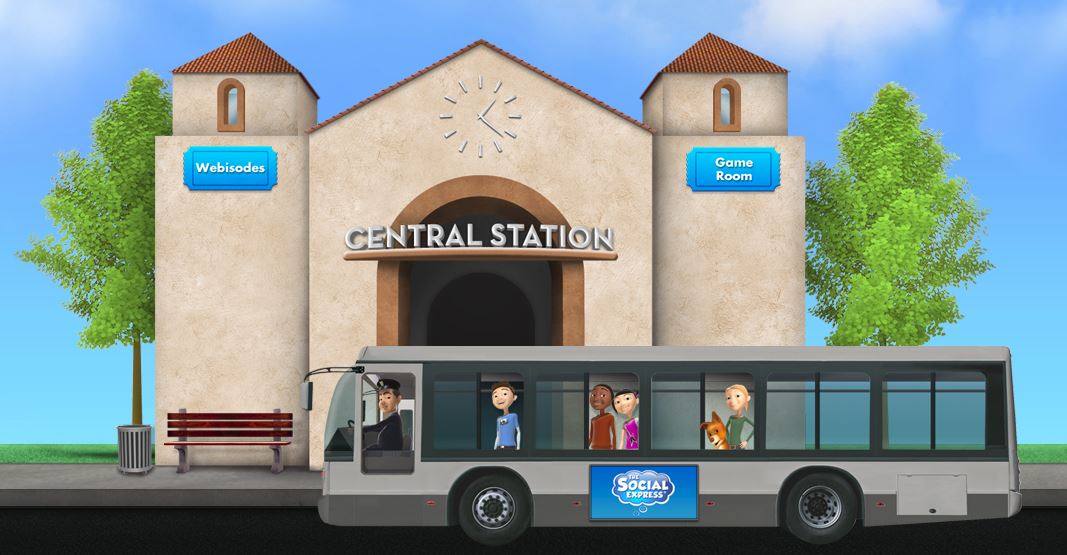
The child dashboard has access to game room and webisodes, both of which are fully interactive!

It’s also award-winning several times over including a Readers Top 100 Product and a Common Sense Media Learning Award!

Some of the best benefits include how to
● Identify feelings in others
● Understand the importance of “eye contact” (thinking with your eyes) in order to figure out what to say or do in social situations
● Read non-verbal social cues
● Identify appropriate coping strategies
● Sequence situations and infer what will come next
● Watch social situations unfold and see how behavior can have negative or positive consequences

Head over here to see how you can get started! They even have an app!

Common Sense Media has officially launched its updated Power UP Special Needs and Learning Difficulties Guide for Kids; and The Social Express II is included!

Being featured in this guide is a meaningful milestone for us. The Common Sense Media team spent months diving deep into research, interviewing experts and educators, and testing products with families and field leaders. Their goal? To identify high‑quality, thoughtfully designed tools that can genuinely support kids who benefit from learning in non‑traditional ways.

We’re proud that The Social Express II was selected as one of those standout resources. It reinforces our mission to help all learners build the social‑emotional skills they need to thrive through engaging, interactive experiences that make skill‑building feel natural and fun.

If you’d like to explore the full guide, it’s available for free on Common Sense Media’s website:
http://www.commonsensemedia.org/guide/special-needs

At Brighten Learning, we’re committed to creating tools that meet diverse learners where they are. Being recognized in this guide motivates us to continue innovating and supporting educators, parents, and,most importantly, kids.

Social Skills Deficits-The Social ExpressOur world is a social place and we spend most of our time participating as members of social groups. Think of church, synagogue, neighborhoods, Parent-Teacher Organizations, recreational sports leagues and more.

For children, social skills are the foundation for getting along with others from the earliest age. In the case of special needs students and those with learning disabilities, extra help is often needed.

Social situations can be complicated for kids with social learning deficits (challenges). They often get lost in a maze of limited social understanding.

These social skills can be as simple as saying “hello” and “goodbye” and as complicated as knowing how to function in a group setting or during difficult social interactions.

Students with social learning challenges require direct instruction, with each facet of every skill broken down into small pieces.

The Social Express addresses these areas of need by providing a highly interactive and visual presentation and utilizing an additional component which allows for the generalization of skills outside of the teaching environment.

Specific Social Interaction Skills

Here is a list some of the social interaction skills and related potential benefits that are addressed in our program:

  • Identify feelings in others
  • Understand the importance of “eye contact” (thinking with your eyes) in order to figure out what to say or do in social situations
  • Read non-verbal social cues
  • Identify appropriate coping strategies
  • Learn how to start conversations
  • Learn how to be part of a group
  • Learn about the hidden rules in social situations
  • Sequence situations and infer what will come next
  • Figure out what to talk about with friends
  • Monitor when others are using appropriate social behaviors
  • Learn about using figurative language (idioms) in conversation
  • Stay on topic when having conversations
  • Watch social situations unfold and see how behavior can have negative or positive consequence

Safe Learning Environment

While good social skills offer resilience to a student, a lack of social skills can lead to a variety of difficulties.

When developing our social skills, social-interaction learning program, The Social Express, the goal was to create a program that works equally well for direct, individual, and group instruction in social skills.

Provided in a controlled, safe environment for learning, practice, and demonstration (in the classroom or at home) children using our program begin to generalize new skills into new environments. This allows for powerful new thinking and adoption of essential social interaction skills.

Research

The connection between learning disabilities (LD) and deficient or ineffective social skills is well documented in the research. The following findings from a 1996 Meta-Analysis conducted by Kavale & Forness in the Journal of Learning Disabilities, is still relevant today Source: LDOnline.

Teachers, non-LD peers, and students with LD all reported students with LD had greater social skills deficits than non-LD students.

Almost three quarters (74%) of students with LD received a negative assessment of their social skills that distinguished them clearly from the non-LD comparison group.

Teachers viewed [LD students] social skills deficits in relation to their academic problems.

Teachers also rated students with LD as having higher levels of hyperactivity, distractibility, and anxiety.

Peer assessments by students without learning disabilities showed that nearly 8 out of 10 students with LD were rejected by their peers.

Students without LD also perceived students with LD as having lower social status and more difficulties in communication, and reported that students with LD interacted, played, and empathized at lower levels than their peers.

Students with LD rated deficiencies in academic areas as their primary problem, with more than 8 out of 10 rating themselves as deficient in academics.

The second most commonly reported deficit by students with LD was interpreting nonverbal communication. More than 7 out of 10 students with LD rated themselves as having social skills deficits that made them different from their peers.

We hope this brief view of social skills and learning disabilities is helpful as you develop learning programs for your special needs students.

— Marc
Dad & Developer

If you’re looking to help your child learn social skills, our online engaging animated program may benefit your child. Parents tell us that kids love the Hollywood style animation and characters and actually ask to use The Social Express!  To see how it works, click here.  Click here to try our 10-day, no risk trial.

Use pictures to help your child to understand idioms used in conversations.

Use pictures to help your child to understand idioms used in conversations like, “piece of cake”.

Does your child have difficulty understanding idioms? Idioms are commonly used phrases that say one thing but mean something completely different. Like “spill the beans”, “piece of cake” or “it’s raining cats and dogs”.

All age groups use idioms and it’s important that your child Read more