When Marc Zimmerman’s twins were given an autism diagnosis, he decided to create something to make their lives better.

By Jamie Pacton

Zimmerman family Courtesy Marc Zimmerman

Marc Zimmerman has been a rockstar, composer, real estate broker, and software startup entrepreneur. But his latest project—founding and running the company responsible for the incredible social situation simulator The Social Express—is the one closest to his heart and home.Marc and his wife Tina are the parents of 14-year-old autistic twins Jared and Jason. When the boys were younger, Zimmerman wanted to create something that would help them navigate tricky social situations, reinforce what the boys were learning in therapy, and be something they could watch and learn from together. With this seed of an idea, Marc invested his life savings, made concrete plans, and now, with the help of Tina and many others, The Social Express is a reality.

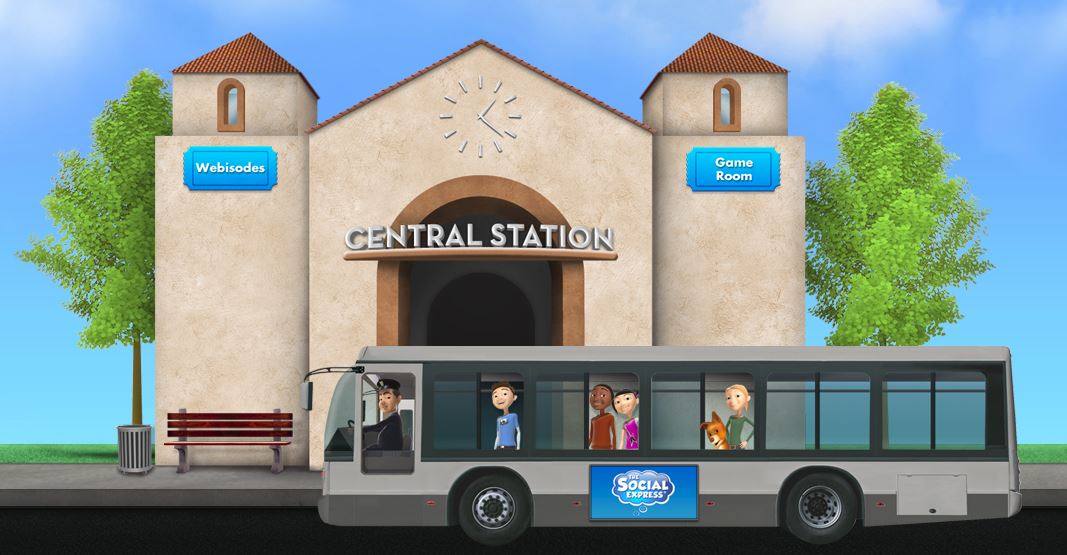
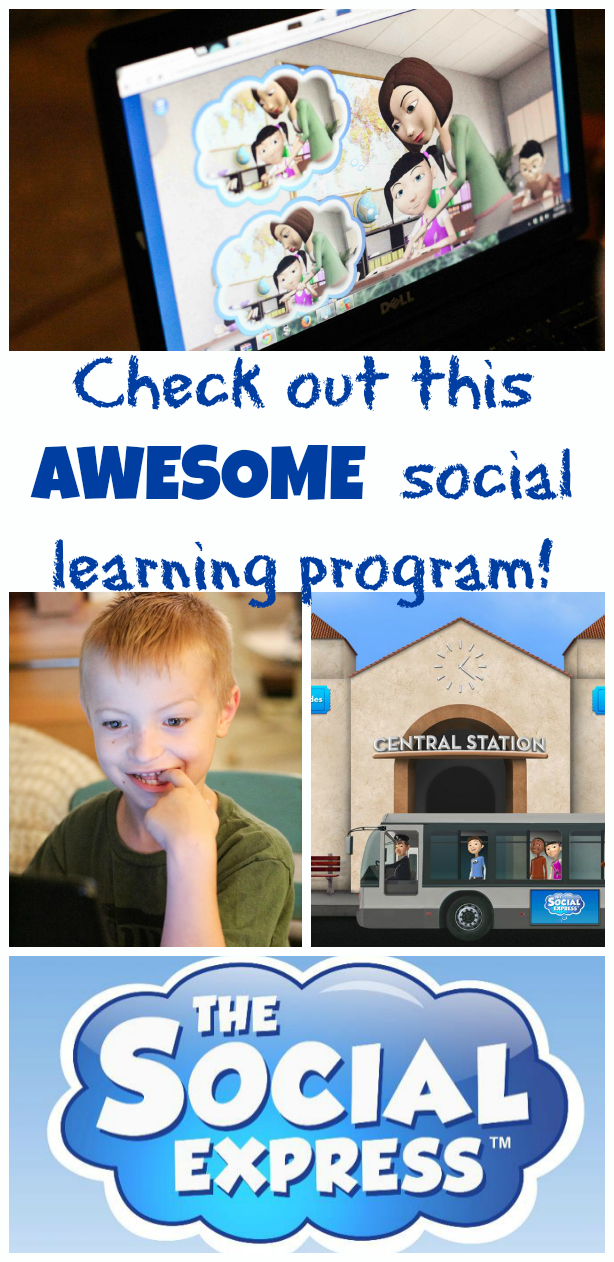
So, what exactly does The Social Express do? According to its website, it, “provides an opportunity for the user to become more socially competent and have successful social interactions.” Or, put in simpler terms: It helps kids practice a variety of social situations in a low-stakes setting. Through colorful, expertly-animated videos and thoughtful storylines, kids can learn more about self-management, group participation, conversations, attentive listening, conflict management, relationships, non-verbal communication, and more. Kids watch the videos, then make choices that move them further along in the storyline. There are webisodes, e-books, music, and a “clubhouse” for social networking. It’s available for the computer or as an app, and Zimmerman notes that his sons and many other autistic kids really appreciate using technology as a vehicle for practicing social rules and conventions.

Social Express Social Express

Although I was skeptical about how much my children—a neurotypical 5-year-old and a non-verbal autistic 7-year-old—would take to the videos, I’m happy to report they were both enthralled by them. Together, we watched several in which kids tried to figure out which social choice was the most productive—and all of us appreciated the interactive aspect of The Social Express. We were also able to have a bit of conversation about the scenarios and why one way of acting was more positive than another in that social situation. I appreciated the conversation starters and the fact that this was low stakes, since social interactions in the real world cause both my children a lot of anxiety.

And my kids aren’t alone in appreciating The Social Express. Zimmerman reports that it is being used in homes and classrooms in more than 70 countries around the world, and it’s won quite a few awards, including being a part of the U.S. Department of Education’s National Education Technology Plan. Some schools are even using it with entire populations of students—not just autistic ones or those with special needs—and they’re seeing tremendous positive gains in social engagement. In fact, based on this success across student populations, Zimmerman is working on an anti-bullying program, similar to The Social Express, that will help kids figure out how to stop bullying in a variety of situations. He’s also planning on rolling out simulation programs to help with life skills and job training for older kids who are transitioning out of school.

The Social Express is a great program, and I love that it was inspired by the Zimmermans’ desire to help thier sons move more easily through the world. I’m hoping that with time, patience, and through practicing in many social situations both simualted and in the real world, my kids can see similar benefits to the Zimmerman twins, who are now artists, play in a band together, attend school, are good friends, and who are beginning to think about what the future might hold.

You can buy The Social Express here, and use this discount code at checkout to take 30% off the annual subscription: COOLTOOL. The code expires April 30, 2016.

Jamie Pacton lives in the Pacific Northwest where she drinks loads of coffee, dreams of sailing, and enjoys each day with her husband and two sons. Find her at www.jamiepacton.com and Twitter @jamiepacton.

Social and emotional learning (SEL) is the cornerstone of emotional intelligence, as these abilities do not come naturally for some special education students. Children in special ed settings need to have their confidence, courage, and emotional awareness nurtured in order to successfully play, work, cooperate, and be productive in their studies. We have all heard that technology can be a great playing-field leveler in a classroom with diverse learners. It can also assist in providing social and emotional skills. Let’s face it — the digital lifestyle is here to stay, so using digital technology to enhance SEL makes perfect sense.

However, I have yet to encounter research that focuses on the effectiveness of using apps designed solely to enhance the social and emotional health of children. Researchers and educators have only begun to closely investigate the impact of these technologies on SEL. For special ed teachers, that research can’t come soon enough.

Young children acquire and utilize their initial social skills mostly in the context of play and shared activities. Through play, they form their first interpersonal interactions and develop important social skills related to empathy, cooperation, conflict resolution, and self-control, which will be used throughout life to maintain healthy relationships with others.

9 Skill-Building Apps

Several apps can be used in the classroom or at home to assist in reinforcing social and emotional learning while also helping kids cope with the pressures that we all face. These apps can help teachers and parents in addressing students with special needs, and many are also available in a web format.

    1. Breathe, Think, Do (Sesame Street) teaches children to keep calm and carry on by introducing three possible strategies for working through problems. It touches on familiar emotional challenges such as problem solving, self-control, planning, and time on task. Intended for very young children, this simple app gives players different scenarios in which the Blue Monster character needs to regulate his or her emotions using the breathe-think-do technique.
    1. Touch and Learn — Emotions (Innovative Mobile Apps) is chock full of wonderful photographs representing four different feelings per page. The child is prompted to match the verbal cue with the appropriate photo. This app focuses on helping kids read body language and understand emotions by looking at pictures and figuring out which person is expressing a given emotion.
    1. Avokiddo Emotions provides opportunities for younger children to explore a wide range of feelings through several silly characters and a plethora of props. This app incorporates activities to help children understand the subtle cause and effect of facial expressions. The main idea is exposing young children to a variety of feelings and helping them grasp emotional connections with those feelings.
    1. Emotionary (Funny Feelings) is designed to give a wide age range of kids the tools and skills to express themselves well in our world of emoticons. The app has become a popular resource for the special needs population. This collection of emotions and funny feelings now allows users to draw their own emotionary “selfie” to match how they are feeling.
    1. GoNoodle is a wonderful web-based way to get younger kids out of their seats and moving. These short physical activities provide brain breaks that can help keep them focused throughout a long day. Studies have shown that physical activity increases blood flow, which increases concentration and attentiveness. This enhances students’ ability to acquire and recall information. These activities make them cross the mid-line of the body, engaging both sides of the brain. GoNoodle provides teachers with fun, interactive ways to get kids moving and feeling good about themselves.
    1. IF. . . The Emotional IQ Game (If You Can) promotes teamwork and collaboration, accentuating how to be in touch with our own feelings and the feelings of those around us. With this app, kids (recommended ages 9-11) learn to listen, make friends, and deal with bullying in an adventure story/game format. IF’s motto: “Play Learn Grow: Succeed at school with friends in life!” This pretty much says it all.
    1. The Middle School Confidential series is a powerhouse of SEL lessons by tween/teen expert Annie Fox. The book/app series for ages 8-14 is a graphic novel sequence focused on making stepping-stones out of stumbling blocks on the road to becoming a teenager. Readers follow the adventures of a group of seventh-grade friends trying to navigate the ever-changing drama of their friendships, families, and school. Excellent resource!
    1. Stop, Breathe & Think (Tools for Peace) promotes mindfulness, meditation, and compassion for middle and high school students and adults. Research has shown that people can develop kindness and compassion by focusing on them through mindfulness and meditation practices. You can cultivate your frame of mind in a very short timespan with simple meditation.
  1. I would be remiss if I didn’t include the The Social Express in this collection of apps. Its quality content keeps students engaged and on the path to mastering healthy social and emotional skills. Research-based webisodes give kids the exposure necessary to develop meaningful relationships and become more socially competent in all realms of life. This program covers the gamut from preschool through high school with a robust SEL curriculum.

The Puzzle of Tech Use

Most students with or without disabilities can and do benefit from SEL-focused technology in the classroom. Incorporating these tech tools should increase student incentive to learn through individualized lessons, especially when tailored to a student’s specific needs. When done well, tech not only reinforces key SEL skills that children need to learn, but it can also drive student enthusiasm and promote self-assurance.

This topic may seem like an oxymoron since we want children to learn how to focus during “real time” and how to live with less tech. A wonderful TED Talk addressing this conundrum is Sherry Turkle’s “Connected, but alone?

Do you know of any digital SEL resources for special education students? Please tell us about them in the comments below.

BOS Header

TWO KEYS TO A GREAT MORNING WITH THE SOCIAL EXPRESS

You know what I’ve been looking for lately? A recipe for a great morning! School days are just so chaotic with missed alarms, and learning skills like tying shoes and of course disagreements over what counts as breakfast. (What, mom?! Those cupcakes have protein, right?!)

Can we talk about this sweet boy for a second?

He is a social bug! He loves friends and makes them wherever he goes, whether they are 5 or 95! Earlier this year, we found out he has SPD, which is short for Sensory Processing Disorder. The icon for it is a rainbow-colored horse, because no two kids are the same! In Andrew’s case, it basically means that he has a hard time processing motion (excitement= lots of big motion here!) but it also effects his emotional regulation and ability to pick up on social cues (he has a super hard time with both!) Where most 7-year-olds would be fine with negotiating friends wanting to do something different, Andrew can get a little hands-on in trying to change the situation to what he wishes it were. It can get tricky sometimes, because expectations are high, and he doesn’t always meet those. I’m thankful for good friends, but still- it’s not alway easy for him or for us.
It’s something that makes your heart hurt as a parent, seeing your kiddo struggle with something that their peers do just naturally. I’ve been looking for some ideas to help Andrew be the best student and friend he can be, and to help our mornings go a little more smooth! (Sometimes we get a little distracted 🙂 )
Andrew’s therapist first recommended The Social Express to us. I think I was a little skeptical of anything really clicking for Andrew, but I’ve been happily proven wrong! See, they wanted to create a program for kids to make social learning easy for them. Our son is a visual learner. I could tell him to use his words, and not his hands, but it just goes right out the window in the moment. We needed a more visual solution. Enter inThe Social Express!

Interactive games are played with hints to help reinforce appropriate social interaction and reactions, plus videos like the one pictured above with two different choices to see the outcome.

I think the photos speak for themselves for his opinion!

He loves it! He asks to play often. It’s pretty cool to watch the wheels turning in his head to think through the scenarios. I can’t wait to talk to his teacher later this month to see if it’s been helping in the class. No behavior notes sent home yet so here is hoping! We do this in the morning before school so he has some clues to help remind him during sticky situations.

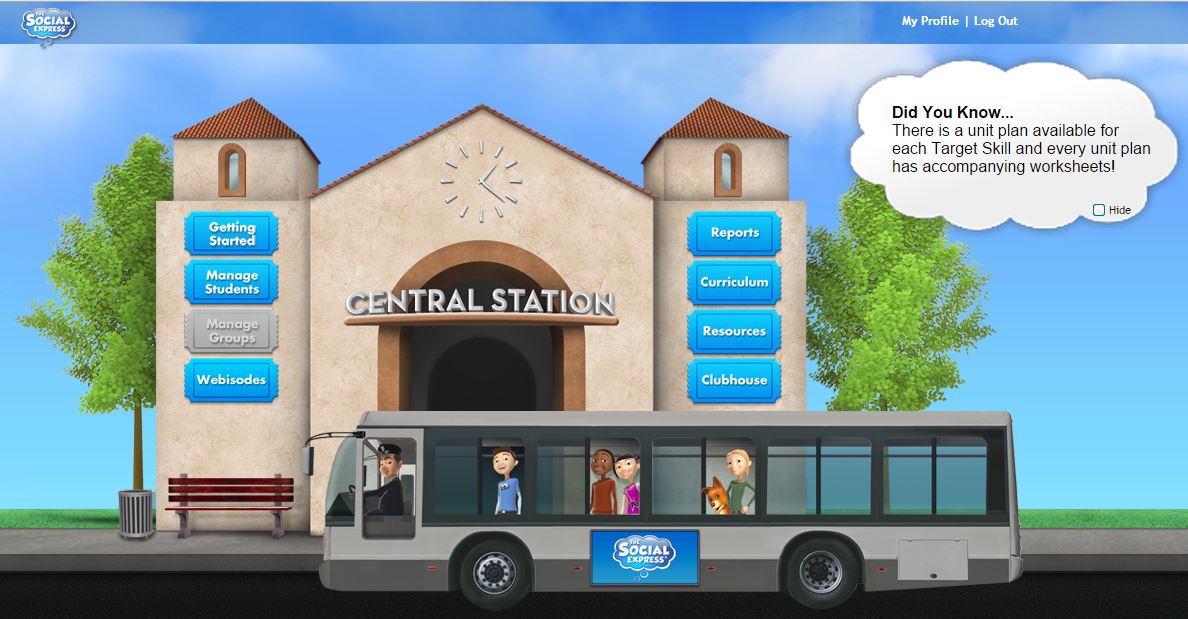
The parent dashboard makes it easy to adjust settings, track progress, and fully customize your child’s experience!

The child dashboard has access to game room and webisodes, both of which are fully interactive!

It’s also award-winning several times over including a Readers Top 100 Product and a Common Sense Media Learning Award!

Some of the best benefits include how to
● Identify feelings in others
● Understand the importance of “eye contact” (thinking with your eyes) in order to figure out what to say or do in social situations
● Read non-verbal social cues
● Identify appropriate coping strategies
● Sequence situations and infer what will come next
● Watch social situations unfold and see how behavior can have negative or positive consequences

Head over here to see how you can get started! They even have an app!

Encinitas, Calif. – Sept. 15, 2015 – Follett Schools Solutions’ President Tom Schenck has joined Brighten Learning Board of Directors.  Brighten Learning develops web-based interactive education software, including the award winning social skills program, The Social Express®.


Schenck joined Follett in 1989 and was appointed president of the Follett School Solutions’ Group (FSS) in April 2014.  Schenck has overall responsibility for preK-12 products and services, including marketing and selling, product management, development, services and product distribution.  FSS employs over 1,300 associates and serves over 70,000 K-12 school institutions with its school management systems and content and services offerings daily.  During his 26-year career at Follett, Schenck has served in many roles, including president of Follett Software Company in 1998, and in 2014 he pioneered the merger of four of Follett’s preK-12 businesses into one organization, Follett School Solutions.


“I have seen numerous innovative companies in my many roles at Follett, and what Marc Zimmerman has created with Brighten Learning taps into the very direction of the future of education” says Schenck.  “My mandate has always been to create and provide education solutions that help administrators, educators and students achieve their goals.  Brighten Learning is the type of forward thinking company that realizes this by leveraging technology with learning in a clear, responsible and highly engaging way.”


Marc Zimmerman, CEO of Brighten Learning, added, “I have been fortunate to know Tom for many years and with his valuable experience and expertise, he can help Brighten Learning navigate the education market and continue our path to deliver the best education products to schools.”

Schenck has extensive experience in software product development, data analysis, and information technology.  Prior to joining Follett, he co-founded Library Systems and Services Inc., a company that specialized in public library automation software and services.  After selling Library Systems and Services in 1985, Schenck joined the software development team at The Library Corp. and played a key role in the development of product line extensions to Bibliofile. In 1987, he was appointed director of R&D.


About Follett’s PreK-12 Business | Follettlearning.com

Follett is the largest provider of educational materials and technology solutions to preK-12 libraries, classrooms, learning centers and school districts in the United States, and a major supplier to educational institutions worldwide. Follett distributes books, reference materials, digital resources, ebooks and audiovisual materials, as well as pre-owned textbooks. Follett also is one of the leading providers of integrated educational technology for the management of physical and digital assets, the tracking, storing and analyzing of academic data, and digital learning environment tools for the classroom focusing on student achievement.


About Follett Corporation | Follett.com

Since 1873, Follett has served as the trusted partner in education for students and educators at all levels of learning. Today Follett delivers physical and digital learning materials, retail services, school content and management systems to more than 70,000 early childhood, primary and secondary schools, and on more than 1,000 college campuses. Headquartered in Westchester, Ill., Follett is a $2.7 billion privately held company.


About Brighten Learning Inc.

Brighten Learning™, founded in 2008 by parents of autistic twins, is a privately held company based in Encinitas, Calif. The company develops The Social Express™ and other interactive social learning software. The company’s mission is to help children with ADHD, Autism and Asperger’s to improve their lives by teaching social skills using video modeling. Visit the company at http://thesocialexpress.com/


For more information visit http://www.TheSocialExpress.com


Media contact:

Leslie Eicher, APR

314-965-1776

Leslie@EicherCommunications.com

Recently a colleague sent me this CNN post. Finally, there is empirical data that shows the correlation between life success and social and emotional skills.

Kelly Wallace is CNN’s digital correspondent and editor-at-large covering family, career and life. Read her other columns and follow her reports atCNN Parents and on Twitter.

(CNN)In our household, we’re still talking about the critically acclaimed box office smash “Inside Out,” Pixar’s animated look at the emotions inside a child’s brain. It came up most recently when we watched Serena Williams cruise to another victory at this year’s Wimbledon, and my youngest daughter, age 7, remarked that her “Joy” (the character who controls happiness in the movie) must be going wild. During the match, Serena’s “Angry” must have been at her brain’s control panel, we all agreed.

I thought of the movie recently as I learned about a new study that showcases just how critical it can be for a child to be able to understand emotions and relate to the world.

Every parent intuitively knows it’s a good thing to teach their child how to share and play well with others, and how to deal with emotions like anger and sadness, but do most of us have any sense of just how important these so-called social and emotional skills can be to our child’s long-term success?

Why doing it 'like a girl' is great

Why doing it ‘like a girl’ is great 01:46
PLAY VIDEO

Related: How to teach girls to be confident #LikeAGirl

The new study, a comprehensive 20-year examination of 800 children from kindergarten through their mid-20s published Thursday in the American Journal of Public Health, found a link between a child’s social skills in kindergarten and how well they were doing in early adulthood.

Children who were helpful and shared in kindergarten were more likely to have graduated college and have a full-time job at age 25. The children who had problems resolving conflicts, sharing, cooperating and listening as kindergartners were less likely to have finished high school and college, and were more likely to have substance abuse problems and run-ins with the law.

The findings are “huge” when it comes to the thinking about how brain health impacts a person’s overall health, said Kristin Schubert, program director for the Robert Wood Johnson Foundation, which funded the research.

“It’s like a paradigm shift around what it means to be mentally well at an early age and how that dictates how life goes for you later on,” she said.

How not to raise a mean girl

How not to raise a mean girl 01:21
PLAY VIDEO

Related: Is the ‘be a man’ stereotype hurting boys?

Emotional skills can be taught

To conduct the study, researchers from Penn State University and Duke University looked at teacher evaluations of kindergartners’ social competency skills, which were conducted in 1991.

Teachers evaluated the kids based on factors such as whether they listened to others, shared materials, resolved problems with their peers and were helpful. Each student was then given an overall score to rate their positive skills and behavior, with zero representing the lowest level and four for students who demonstrated the highest level of social skills and behavior.

Researchers then analyzed what happened to the children in young adulthood, taking a look at whether they completed high school and college and held a full-time job, and whether they had any criminal justice, substance abuse or mental problems.

For every one-point increase in a child’s social competency score in kindergarten, they were twice as likely to obtain a college degree, and 46% more likely to have a full-time job by age 25.

For every one-point decrease in a child’s social skill score in kindergarten, he or she had a 67% higher chance of having been arrested in early adulthood, a 52% higher rate of binge drinking and an 82% higher chance of being in or on a waiting list for public housing.

“We were surprised but not completely surprised” by the findings, saidDamon Jones of Penn State University, the lead researcher for the study.

Related: Emotional intelligence: The benefits of singing the blues

Jones said he and his fellow researchers knew the importance of social and emotional competency in a child’s development, but didn’t quite expect to find as strong a correlation between those skills and a child’s long-term well-being, even with other variables factored out, such as a family’s socioeconomic status and the child’s academic ability.

The craziest thing I did to make my kid happy was...

The craziest thing I did to make my kid happy was…01:58
PLAY VIDEO

What’s heartening from the findings, Jones said, is how social skills can be taught and learned throughout a child’s development.

“Some people might look at this and say, ‘Well, if my child measures low on a scale like this, does this mean my child is doomed or … they are sentenced to all these terrible outcomes?’ ” said Jones, who is a research assistant professor of health and human development at Penn State.

The answer is no, he said, pointing to all the effective ways to address and help children develop good social and emotional skills, whether through schooling or parenting.

“The research greatly shows that these are the type of skills that are malleable, in fact much more malleable than say something like IQ or other things that are more likely traits that are more ingrained.”

‘Far-reaching’ implications

The implications of the study’s findings are far-reaching, said Schubert of the Robert Wood Johnson Foundation.

First, there’s a message to educators that social and emotional learning can be just as important as cognitive skills.

Revolt: The kindergartners take over!

Revolt: The kindergartners take over! 02:45
PLAY VIDEO

“Traditionally, we’re focused much more on academic achievement and more and more we’re realizing through many studies that academic achievement is only one part of making somebody successful,” said Penn State’s Jones.

“If we’re sticking with the schools analogy, it takes the discipline, it takes the motivation, the attitude, the ability to work with others and work with adults to be able to succeed in schools and attain degrees.”

Related: Why we pick bad leaders and how to spot the good ones

Business leaders understand the importance of emotional intelligence, Schubert said. In some ways, they grasped this before many who study early childhood, she said.

“They know they want to hire people who can play well with others because they know it actually impacts the bottom line,” she said.

How to teach emotional learning

Parents, there’s a message here for all of us, too, Schubert said: “This stuff matters.”

“If you talk about sharing and learning how to manage emotions and things, I think most parents say, ‘Yeah, I do that,’ ” but they often concede that they don’t exactly know what to do, Schubert said.

“No one really talks about how you do this, so wouldn’t it be great if we started a dialogue about how there are actually a lot of resources out there to help you do it.”

Related: SOS for stressed out teens

Enter Sofia Dickens, who became so convinced of the importance of emotional intelligence on life success that she founded a company,EQtainment, which creates board games and toys to help children flex their social and emotional muscles.

“These skills are very simple and it’s something that any parent can work on at home, in their living room, in the car, in the grocery store line, while cooking dinner, while eating dinner,” said Dickens, a mom of three and former television host.

Is it OK to discipline someone else's child?

Is it OK to discipline someone else’s child? 01:09
PLAY VIDEO

Dickens said parents can play games like “Red light, green light” and “Freeze tag,” which help kids learn how to control their bodies, and can help them learn how to control their thoughts and emotions.

Another way to practice building “grit and resilience and empathy” in kids is spending time reading with them, she said.

“The only way to accelerate the life experience process, since they’re just kids and don’t have a lot of life experiences, is to go on a journey learning from other people’s life experiences,” she said.

“So when you read a book with your children, ask them questions about how the main character might be feeling or what motivates the main character or what you would do if you were in their shoes.”

Dickens was not involved in the new kindergarten study, but said she wanted to shout the findings “from the rooftop.”

“This study (is) replicating what we already know to be true, which is that (emotional intelligence) has possibly the greatest correlation to school readiness and life success and that’s why it’s something that we really want to invest in when it comes to raising and growing our kids.”

What do you think is the best way to teach children strong social and emotional skills? Share your thoughts with Kelly Wallace on Twitter @kellywallacetv or CNN Parents on Facebook.

Bullying, Students with Disabilities, and Social Emotional Skills

Students with disabilities face an increased risk of being bullied. Some also engage in bullying behavior. To ensure the emotional well-being of its most vulnerable students, schools must take essential steps to reduce the bullying of students with disabilities and remedy the harmful effects.

This document will address the federal laws associated with bullying of and by students with disabilities, research insight related to such bullying, as well as how The Social Express® and Cool School™ can support a multi-tiered approach to assist all students in gaining more effective social relationship skills.

Federal Laws Associated with Bullying and Students with Disabilities:

Three federal laws govern situations related to bullying of or by students with disabilities: Section 504 of the Rehabilitation Act of 1973 (Section 504) and Title II of the Americans with Disabilities Act of 1990 (Title II) and Individuals with Disabilities Education Act (IDEA).[i]

The importance of addressing the risks associated with bullying and students with disabilities was recently reinforced by the U.S. Department of Education (Department) in two Dear Colleague Letters. In 2013, the Department’s Office for Special Education and Rehabilitation Services (OSERS) issued a Letter that called upon schools to address bullying of or by students with disabilities who are receiving services under the IDEA.[ii] In 2014, the Department’s Office for Civil Rights (OCR) issued a Dear Colleague Letter reminding schools of their obligations to address the harassment of students with disabilities under Section 504 and Title II.[iii]

Under Section 504 and Title II, a school’s inappropriate response to harassment of a student based on disability constitutes disability-based harassment. It is the responsibility of schools under Section 504 and IDEA to ensure that students receive a free appropriate public education (FAPE). Bullying of student with a disability on any basis (whether based on the student‘s disability or not) can result in a denial of FAPE that must be remedied. Discriminatory harassment and denial of FAPE are two different, but related, issues.

In determining whether disability-based harassment has occurred, OCR will consider the following:

  • Was a student with a disability bullied by one or more students based on the student’s disability?
  • Was the bullying conduct sufficiently serious to create a hostile environment?
  • Did the school know or should it have known of the conduct?
  • Did the school fail to take prompt and effective steps reasonably calculated to end the conduct, eliminate the hostile environment, prevent it from recurring, and, as appropriate, remedy its effects?

Schools also face the potential of financial liability if sued by a student based on discriminatory harassment. In 2012, the Second Circuit upheld a 1 Million Dollar verdict against a New York school by a student who had endured over three years of harassment.[iv] It appeared the school was doing everything required in most anti-bullying statutes. It had a policy against bullying, held trainings, had a reporting system, and responded every time the student reported. The Court noted that the school ignored many signals that more action was needed and only engaged in “half-hearted efforts” to correct the “culture of bias” that was fueling the harassment.

When addressing discriminatory harassment, the focus is on the overall school climate, the behavior of other students towards students with disabilities, and the effectiveness of interventions in hurtful situations. If students with disabilities are regularly treated badly by their peers, a school must be engaging in diligent efforts to increase the level of respect demonstrated by all students towards those with special needs and intervene effectively.

In determining whether a student receiving IDEA FAPE or Section 504 FAPE services who was bullied or engaged in bullying was denied FAPE, OSERS or OCR will consider:

  • Did the school know or should it have known that the effects of the bullying may have affected the student’s receipt of IDEA FAPE or Section 504 FAPE?
  • If the answer is “yes,” did the school meet its ongoing obligation to ensure FAPE by promptly determining whether the student’s educational needs were still being met, and if not, making changes, as necessary, to his or her IEP or Section 504 plan?

When addressing FAPE, the focus is on the educational needs of and services provided to the student. A school’s investigation should determine whether that student’s receipt of appropriate FAPE services has been affected by the bullying. If bullying of a student has created a hostile environment, there is reason to believe this has also interfered with FAPE. But even if the situation does not meet the level of a hostile environment, or if this is a situation where the student with disabilities has engaged in bullying, the school still has an obligation to address FAPE-related concerns.

As part of an appropriate response to a bullying situation, the school should convene the IEP or 504 team to determine whether the student’s needs have changed such that the IEP or 504 FAPE services plan is no longer providing a meaningful educational benefit. The team must determine the extent to which additional or different FAPE services are needed to address the student’s individualized needs and then revise and implement the IEP or 504 plan accordingly. However, efforts to address the bullying situation must also not result in a denial of FAPE. For example, schools must avoid the unilateral placement of a student in a more restrictive environment as a way to address the bullying concerns.

Under IDEA, schools must establish objectives for both academic and functional skills. A student who is being or engaging in bullying will likely require additional or different functional skills objectives, specifically those related to improving this student’s social relationship skills.

If a student with a disability is engaging in bullying, the situation must be investigated thoroughly to determine whether this student’s inappropriate behavior is associated with his or her disability. For example, the symptoms associated with trauma or conduct disorder include aggressive behavior that could be considered bullying.[v] It is also possible that this student’s aggressive behavior is in response to being disparaged by other students.[vi] Both of these kinds of situations, should result in an IEP or 504 meeting to determine whether additional or different FAPE services, including functional skills objectives, are required.

Increased Risk of Bullying Associated with Disabilities:

Students with disabilities are more likely to be involved in bullying situations than their peers.[vii] This includes being bullied or engaging in bullying–or both. These students may have physical characteristics or engage in behaviors that place them at greater risk of being targeted. They may be perceived to be “different” because they leave the general classroom environment to receive more specialized services. Their disability itself may play a role in limiting their ability to accurately interpret social cues and respond in an effective manner. Also their disability may make it more difficult for them to recognize the concerns and gain adult assistance.[viii]

The aggressive behavior of students with disabilities, especially those who are classified as having emotional and behavioral disorders (EBD), may be a component of their disability. Alternatively, such aggressive behavior may be a reaction to the frustration of constantly being the target of aggressive behavior by others. It is important these situations are distinguished.

A consistent finding in the literature is that students with disabilities often lack the social relationship skills necessary to avoid involvement in bullying situations. One recent study found that students with disabilities engaged in fewer prosocial behaviors and were more socially isolated than students without disabilities.[ix] The authors outlined the necessary steps to address these concerns:

Effective interventions that target bullying behaviors in schools are designed to restructure the school climate so that it is positive and inclusive. These interventions underscore the complex ecology that foster and maintain a bullying climate suggested that by increasing awareness, understanding and acceptance among all students and teachers may decrease the risk of involvement in bullying for students in special education. Bullying prevention and intervention should be implemented for students, regardless of disability status and should emphasize the teaching of prosocial skills. Students in general education may participate in this process by serving as the prosocial role models for students with disabilities. Additionally, programming should be consistently implemented across general and special education, should occur in each grade, and should be part of the inclusive curriculum. Social and emotional learning initiatives can create a culture of inclusion for all individuals. A culture of respect, tolerance, and acceptance is our only hope for reducing bullying among all school-aged youth.

The Social Express® & Cool School™ Can Support Prosocial Behavior:

Addressing the challenges associated with bullying of and by students with disabilities will require a multi-tiered social-ecological approach. Schools must focus on increasing the tolerance and acceptance of students with disabilities by their peers and assisting those with disabilities in gaining the prosocial skills necessary to more effectively interact with peers. Social Express & Cool School™ can provide essential support for the necessary multi-tiered social-ecological approach.

Tier 1. Universal Instruction

The objective for universal instruction is focused on increasing the awareness, understanding, acceptance and compassion of all students, especially towards those who are “different,” including those who have disabilities. This instruction should also reinforce how students can reach out to be kind to others and step in to stop hurtful situations. The Social Express® and Cool School™ support effective universal instruction especially at the elementary school level.

Tier II. Individualized Targeted Supports.

Because students who have disabilities face greater social relationship challenges, it is recommended that schools proactively address this concern by providing social skills instruction in the Learning Center.

Students with social learning challenges require direct instruction, with each facet of every skill broken down into small pieces. The Social Express® addresses these areas of need by providing a highly interactive and visual presentation which allows for the generalization of skills outside of the teaching environment. Cool School™ utilizes the same individualized approach to address the specific challenges associated with those who are hurtful. For both of these programs, additional face-to-face role-playing activities can provide the opportunity for students to practice essential social skills in a protected environment.

Intensive Interventions:

The Social Express® and Cool School™ can also be incorporated into the more comprehensive intensive interventions required by the minority of students who face even greater social relationship and behavioral challenges.


[i] Section 504 of the Rehabilitation Act of 1973. 29 U.S.C § 79; The Americans with Disabilities Act of 1990. 42 U.S.C. §§ 12131-12134; and Individuals with Disabilities Act. 20 U.S.C. § 1400 et seq.

[ii] U.S. Department of Education, Office of Special Education and Rehabilitation Services (August 20, 2013) Dear Colleague Letter Keeping Students with Disabilities Safe from Bullying.

[iii] U.S. Department of Education Office for Civil Rights, (2014) Dear Colleague Letter on bullying of students under Section 504.

[iv] Zeno v. Pine Plains Central School District, 702 F3d 655 (2d Cir. 2012).

[v] Rose, C. A., Swearer, S. M., & Espelage, D. L. (2012). Bullying and students with disabilities: The untold narrative. Focus on Exceptional Children, 45(2), 1–10.

[vi] Rose, C. A., Espelage, D. L., & Monda-Amaya, L. E. (2009). Bullying and victimization rates among students in general and special education: A comparative analysis. Educational Psychology, 29, 761–776,

[vii] Rose, C. A. (2011). Bullying among students with disabilities: Impact and implications. In D. L. Espelage, & S. M. Swearer (Eds.), Bullying in North American schools (pp. 34–44). (2nd ed.). New York, NY: Routledge.

[viii] Rose, C. A., Espelage, D. L., & Monda-Amaya, L. E. (2009). Bullying and victimization rates among students in general and special education: A comparative analysis. Educational Psychology, 29, 761–776,

[ix] Swearer, S. M., Wang, C., Maag, J. W., Siebecker,A. B., & Frerichs, L. J. (2012). Understanding the bullying dynamic among students in special and general education. Journal of School Psychology, 50, 503–520.
Common Sense Media has officially launched its updated Power UP Special Needs and Learning Difficulties Guide for Kids; and The Social Express II is included!

Being featured in this guide is a meaningful milestone for us. The Common Sense Media team spent months diving deep into research, interviewing experts and educators, and testing products with families and field leaders. Their goal? To identify high‑quality, thoughtfully designed tools that can genuinely support kids who benefit from learning in non‑traditional ways.

We’re proud that The Social Express II was selected as one of those standout resources. It reinforces our mission to help all learners build the social‑emotional skills they need to thrive through engaging, interactive experiences that make skill‑building feel natural and fun.

If you’d like to explore the full guide, it’s available for free on Common Sense Media’s website:
http://www.commonsensemedia.org/guide/special-needs

At Brighten Learning, we’re committed to creating tools that meet diverse learners where they are. Being recognized in this guide motivates us to continue innovating and supporting educators, parents, and,most importantly, kids.

Expands Opportunity for Educators to Help Autistic Students Learn Social Skills

San Diego, CA (PRWEB) May 16, 2014

Windows ProductsBrighten Learning®, makers of engaging, online interactive programs for students learning social skills, is pleased to announce The Social Express® App is now available in the Windows Store. Social Express software is designed to teach children and young adults with high functioning autism and other special needs how to manage social situations, helping them to develop meaningful social relationships and succeed in life.

The award-winning program has recently expanded its content and moved to an online SaaS subscription model. As with its original release, The Social Express uses relatable characters and video modeling to provide a visual model of targeted behaviors and skills. The Social Express aligns with Common Core Standards and supports educators who are teaching K-6 children how to think about and manage social situations with tools and reports.

WindowsStore_badge_en_English_Green_med_258x67

“Our approach at The Social Express is to leverage technology to create digital content and curricula that is easy-to-use, fun and engaging,” said Marc Zimmerman CEO/Founder of The Social Express. “We are truly proud of this collaboration with Microsoft, as our new app will increase our reach to additional Windows 8 devices, integrate fully with Office 365, and make it easier for educators to help their students learn social skills.”

Microsoft has long been committed to developing innovative accessibility solutions for students of all ages and all abilities which is why we are excited to support The Social Express app that will allow educators to create a truly immersive, personalized learning experience for students with autism,” said Margo Day, vice president, U.S. Education, Microsoft Corp. “We know that communication is the most in-demand skill for jobs of today and in the future and this app will enable students with the inter-personal skills they will need to communicate effectively and succeed in the future.”

Since launching in November 2011, The Social Express has received supportive testimonials from across the globe. Hundreds of stories of progress and success have poured in from Speech-Language Pathologists (SLPs), behaviorists, educators and parents.

For third quarter, 2014, The Social Express will expand its learning content to include e-books, workbooks for educators as well as additional Webisodes addressing social skills.

About Brighten Learning, Inc.:
Brighten Learning®, founded by parents of autistic twins in 2011, is a privately held company based in Encinitas, California. The company develops The Social Express® and other interactive social skills software and learning management systems. The company’s mission is to help special needs children with social-emotional deficits to improve their lives. The company’s video modeling social skills learning programs help children with ADHD, Autism, Asperger’s, and related disorders to improve their interactions with others. Visit the company at http://thesocialexpress.com/

Social Skills Deficits-The Social ExpressOur world is a social place and we spend most of our time participating as members of social groups. Think of church, synagogue, neighborhoods, Parent-Teacher Organizations, recreational sports leagues and more.

For children, social skills are the foundation for getting along with others from the earliest age. In the case of special needs students and those with learning disabilities, extra help is often needed.

Social situations can be complicated for kids with social learning deficits (challenges). They often get lost in a maze of limited social understanding.

These social skills can be as simple as saying “hello” and “goodbye” and as complicated as knowing how to function in a group setting or during difficult social interactions.

Students with social learning challenges require direct instruction, with each facet of every skill broken down into small pieces.

The Social Express addresses these areas of need by providing a highly interactive and visual presentation and utilizing an additional component which allows for the generalization of skills outside of the teaching environment.

Specific Social Interaction Skills

Here is a list some of the social interaction skills and related potential benefits that are addressed in our program:

  • Identify feelings in others
  • Understand the importance of “eye contact” (thinking with your eyes) in order to figure out what to say or do in social situations
  • Read non-verbal social cues
  • Identify appropriate coping strategies
  • Learn how to start conversations
  • Learn how to be part of a group
  • Learn about the hidden rules in social situations
  • Sequence situations and infer what will come next
  • Figure out what to talk about with friends
  • Monitor when others are using appropriate social behaviors
  • Learn about using figurative language (idioms) in conversation
  • Stay on topic when having conversations
  • Watch social situations unfold and see how behavior can have negative or positive consequence

Safe Learning Environment

While good social skills offer resilience to a student, a lack of social skills can lead to a variety of difficulties.

When developing our social skills, social-interaction learning program, The Social Express, the goal was to create a program that works equally well for direct, individual, and group instruction in social skills.

Provided in a controlled, safe environment for learning, practice, and demonstration (in the classroom or at home) children using our program begin to generalize new skills into new environments. This allows for powerful new thinking and adoption of essential social interaction skills.

Research

The connection between learning disabilities (LD) and deficient or ineffective social skills is well documented in the research. The following findings from a 1996 Meta-Analysis conducted by Kavale & Forness in the Journal of Learning Disabilities, is still relevant today Source: LDOnline.

Teachers, non-LD peers, and students with LD all reported students with LD had greater social skills deficits than non-LD students.

Almost three quarters (74%) of students with LD received a negative assessment of their social skills that distinguished them clearly from the non-LD comparison group.

Teachers viewed [LD students] social skills deficits in relation to their academic problems.

Teachers also rated students with LD as having higher levels of hyperactivity, distractibility, and anxiety.

Peer assessments by students without learning disabilities showed that nearly 8 out of 10 students with LD were rejected by their peers.

Students without LD also perceived students with LD as having lower social status and more difficulties in communication, and reported that students with LD interacted, played, and empathized at lower levels than their peers.

Students with LD rated deficiencies in academic areas as their primary problem, with more than 8 out of 10 rating themselves as deficient in academics.

The second most commonly reported deficit by students with LD was interpreting nonverbal communication. More than 7 out of 10 students with LD rated themselves as having social skills deficits that made them different from their peers.

We hope this brief view of social skills and learning disabilities is helpful as you develop learning programs for your special needs students.

— Marc
Dad & Developer

If you’re looking to help your child learn social skills, our online engaging animated program may benefit your child. Parents tell us that kids love the Hollywood style animation and characters and actually ask to use The Social Express!  To see how it works, click here.  Click here to try our 10-day, no risk trial.

sara-list-300trAs a dad of autistic twins, I have been involved in many IEP meetings beginning when the twins (now 12 1/2) were three years old.  (IEP means Individualized Education Program.)

I like to think of the IEP as a road map Read more